“Philadelphia has what it takes to host the world.”
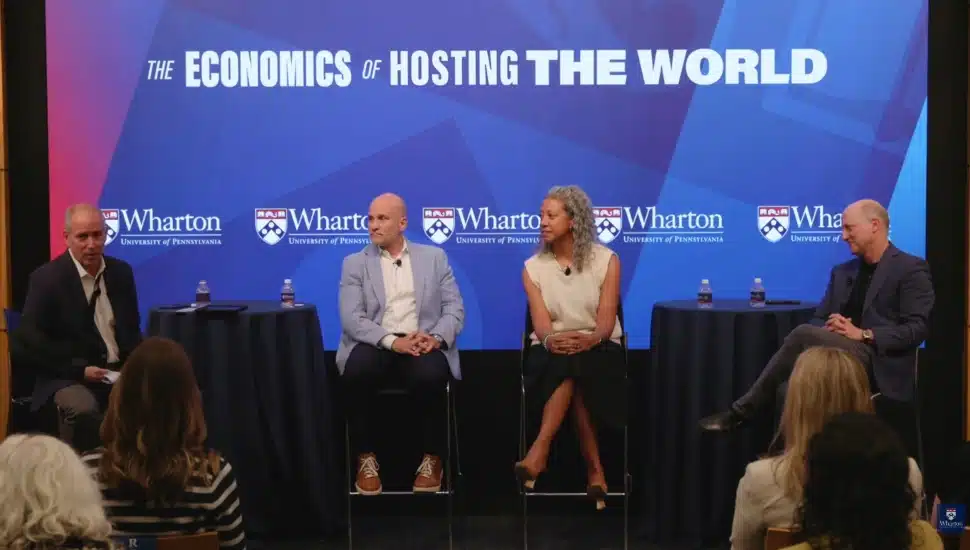
Those were the words spoken by Kevin Kaiser, adjunct full professor of finance at The Wharton School.
He was moderating a recent panel discussion at the school, “The Economics of Hosting the World,” which took a deep dive into how hosting major sporting events can influence local economies.
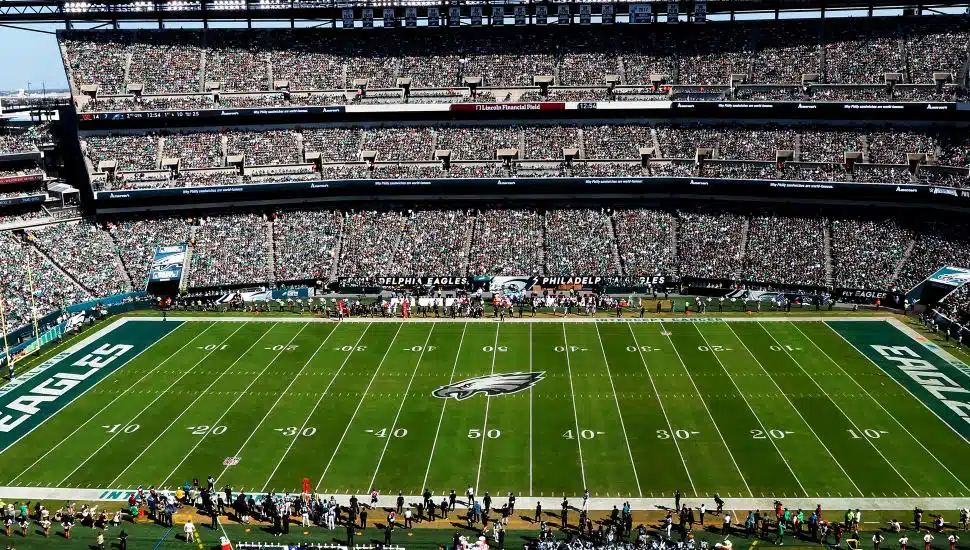
Since moving to Philadelphia in 2017, Kaiser has seen the city host two Super Bowl parades, proving that it can handle massive sporting events.
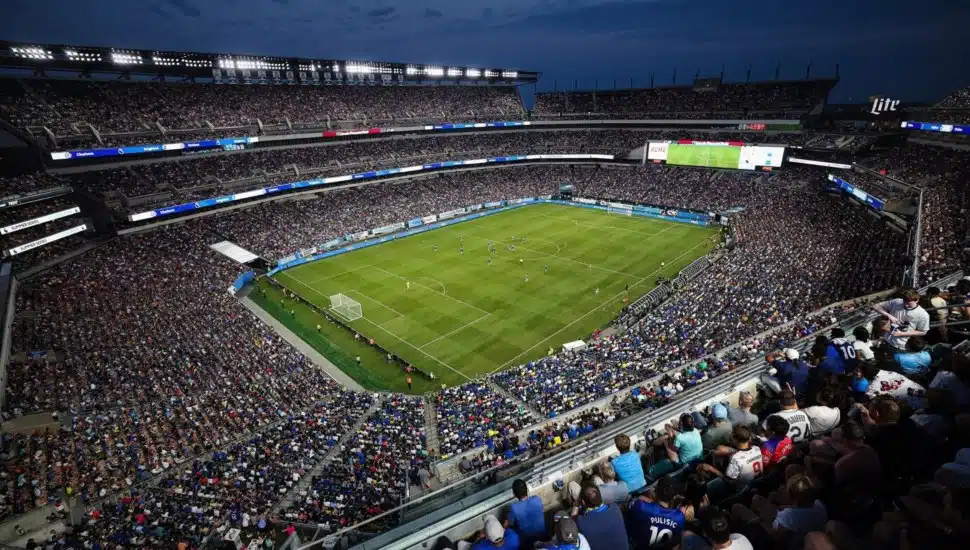
As the city prepares to host the world in a number of major sporting events in 2026 — including the FIFA World Cup and MLB All-Star Game — Philadelphia has a chance to continue to prove itself.
What Does Success Look Like?
The economics of what it means to host major sports is an important thing to consider.
Philadelphia Union President Tim McDermott said when it was first announced that the World Cup was coming here, many in the Major League Soccer world saw it as “a potential catalyst to significantly growing our fan base,” he said.
“And since that time, and as we’ve neared 2026 here, the idea of doubling our fan base has been the goal,” added McDermott.
He hopes that the World Cup will bring in new fans to the sport of soccer and to the Union.
Philadelphia is hosting not only a slew of major sporting events, but a number of other events celebrating America’s 250th birthday.
As a result, many will be coming to Philadelphia from out of town and staying for multiple days, which is something Visit Philadelphia will be keeping a close eye on.
“Success for us really looks like the moment in time that you measure, which is hotel occupancy,” said Visit Philadelphia CEO Angela Val.
The higher the average hotel occupancy rate is, the more economic impact that city receives.
In addition to that, Val noted that the organization is also looking to elevate the brand perception of the city for both residents and visitors.
As many visitors will be coming to the city for not only the sporting events, but Visit Philadelphia.
Just the fact that Philadelphia is even being considered to host these major events shows that the city has moved in a positive direction.
Larry Needle, executive director of PHL Sports, harkened back to the early 1990s when Philadelphia previously placed a bid for the World Cup.
The city pitched Veterans Stadium as the venue, but the city lacked hotel rooms.
To put it plainly, Needle said the city just wasn’t ready at the time.
“It has been amazing,” he added. “just to see how the city has evolved and how our sports offerings and our hospitality offerings have evolved immensely.”
Whereas, decades ago there were struggles, Philadelphia is now able to sell itself and its venues as viable suitors for large-scale sporting events.
Hosting From the City’s Perspective
When considering itself a host, any city would have to also think about the return on investment it gets in the aftermath of a large-scale event.
This is because of the millions of dollars that goes into it all.
As a result, the city must be strategic in which events it considers being a host city for.
Needle said that Philadelphia is in position to bring the biggest and best events to the city, but also has to be strategic in selecting events that fit the sports calendar, will be truly impactful for the city, and Philadelphians will embrace.
However, it’s not just a financial decision.
“If we were only going to do this for the return, we wouldn’t do it,” said Val. “You have to start with where you as a city want to be, not where you are today.”
Not every city can host large-scale events, so Val said, being able to do so is a privilege.
She added that those events are what helps elevate cities.
A Look Ahead to 2026 and Beyond
According to PHLCVB, Philadelphia brought in nearly 560,000 attendees to the city in 2025 through sporting events, conventions, and meetings. With attendees spending $320 million locally, it generated $496 million across the city.
Meanwhile, the city welcomed more than 1 million international visitors, who spent almost $613 million in the region, generating $1 billion in economic impact.
The city and region has the opportunity to exceed each of those numbers this year through these sporting events.
One of the positives of the various sporting events coming to the city this year is how it will attract different audiences.
All of them have to be accounted for.
“Generally speaking, we’re just looking at the magnitude of the event and the opportunity for the city, the hospitality community, our venues… these events have to be successful,” said Needle.
Once this year’s sporting events end and the calendar moves to 2027, it doesn’t mark the end of the road.
“This is a great year to use as a foundation, as a base to build from,” said Kaiser. “It’s not just a great year, but a great beginning of a 20-year future.”
“We never saw 2026 as an endpoint… it is a starting point, like a launchpad,” Val added.
Looking ahead 20 years, Val said she would like to see Philadelphia’s population go back to over 2 million, as well as more investments in the city.