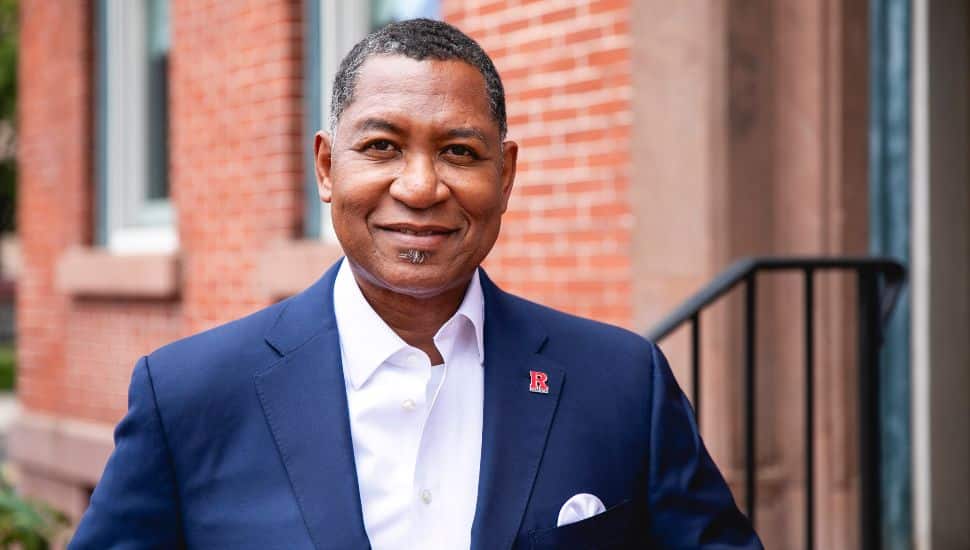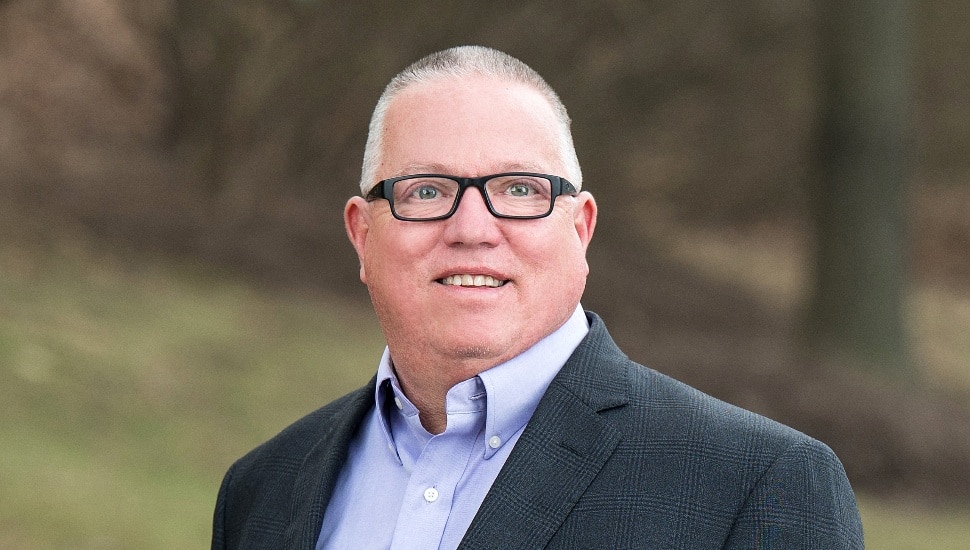

Clarence Martindell, Executive Vice President of Commercial Real Estate Lending at Meridian Bank, spoke with PHILADELPHIA Today about growing up in the great outdoors of Hilltown Township.
He came from a long line of union plumbers and learned a strong work ethic from his parents and the many mentors he sought out for himself.
After deciding not to go into the family business, he explored construction, mechanic work, and computer science before finding his home in real estate banking.
Today, his passion is financing affordable housing, in and out of Philadelphia, to give people from all walks of life access to quality homes.
Where were you born, and where did you grow up?
I was born the oldest of two kids in Philadelphia, and shortly after my birth, my parents realized they had to move out to the suburbs. So, I grew up in a small township called Hilltown in central Bucks County.
I’m Clarence Martindell IV. The other three were master plumbers. I’m the one who broke the mold.
Did you take some heat for not wanting to go into the family business?
Yes. My dad, despite going to college, was like, “There’s no reason you can’t go to the trade school and get your plumbing certificate, so you have something to fall back on.” I thought there was other stuff for me to do.
I did not know what I wanted to do when I was in high school, so I went to the tech school and learned how to be a diesel mechanic. Then, my senior year of high school, I was like, “I don’t want to do this. I want to be in Computer Science. I want to write code.”
I had to drop out of tech school and catch up on all of the courses needed to get into college in one year, which I did. Then I went to Kutztown University for Computer Science. I lasted about a year and a semester there.
You just told me your dad was a plumber. What did your mom do?
My mom was a church secretary.
What do you remember about growing up? What memories stay with you?
Hilltown, at that point in time, was largely a rural community with some scattered single-family houses amongst farms.
I had a 15-mile swatch that I could travel to on my bicycle. So, me and a couple of friends would disappear on our bikes after breakfast and be back for dinner. Our parents didn’t know where we were going.
Summer days were spent at parks or fishing, or exploring the woods. We didn’t get into trouble, but we were out having a good time. In the fall, we all hunted. We would come home from school, drop our book bags, grab our guns, and walk out the back door and through the farmers’ fields hunting. We enjoyed the great outdoors.
My mom’s favorite words to me were, “It’s far too nice of a day outside for you to be indoors.” It didn’t matter if it was zero degrees or a hundred degrees, raining or snowing or sunny. She meant it.
Did you play any sports in high school?
I played a lot of soccer. A little bit of baseball, but mostly soccer.
What kind of jobs did you have in high school?
I worked in the kitchen at a retirement home. Right after I turned 16, I started as a dishwasher and quickly became a Hot Prep Cook. By my senior year of high school and first year of college, I was managing the kitchen on the weekends.
I would come home from college on Friday, get there around 3:30 PM, prep and cook dinner, get there the next morning at 6:00 AM, prep and cook breakfast, lunch, and dinner, repeat that Sunday, and then drive back to Kutztown.
You had this sense of responsibility about you. Where does that come from?
My mom had a very strong work ethic, and she instilled that in me.
What kind of music floated your boat when you were in high school and college?
Back then, folksy classic rock. Springsteen was probably my favorite.
Did you go to any concerts?
I went to see Springsteen a couple of times. Of all people, I went to see Charlie Daniels at the Valley Forge Music Fair. I remember that because of the rotating stage.
You mentioned going to trade school in Kutztown. Why there?
I could afford it, and it was about an hour away. It afforded me the ability to come home on weekends so it was easier to get to work.
I pretty much worked my way through college. My parents didn’t have endless means, so a lot of that was on me. They helped me, but I wasn’t getting a free ride.
Did you look at any other places besides Kutztown?
I got accepted at Drexel because, at that point in time, I was really into the Computer Science major. When I weighed the costs, I was like, “I’m not going to be able to swing this.”
Why did you switch your major from Computer Science?
Part of the Computer Science curriculum required you to take some Business courses, so I took Accounting 1 and 2, and I fell in love with that.
Did you and your dad ever make peace about you not going into the family business?
He eventually came around and figured it was probably for the best, as my career progressed and moved on.
Did you go for a master’s degree or any graduate work?
I went straight into the working world. I finished up at Kutztown, working in Construction any chance I had. All summer, all fall break, spring break, and Christmas break. My senior year, I was working Friday, Saturday, and Sunday in Construction. So, once I had graduated, I still had significant contacts in the Construction industry.
That summer, I proposed to my now wife, and she said yes, with one stipulation: That I get a job using my degree before the end of the summer, because she knew I would work myself to death in Construction.
So, I agreed. I was haphazardly looking for a job through the summer and took a job at a small savings and loan bank that started Aug. 29. I might have been leaning on the tape a little bit, but I did fulfill my obligation.
Looking back over your career, the last 20 or 25 years, who were the other people who saw promise in you, besides your wife?
Each of my respective supervisors, all the way from the controller at Sellersville Savings and Loan. He was the one who hired me for my first job. He later confided, “I knew you were going to be a good hire. I didn’t know how long I was going to be able to keep you.” I was working in the accounting office doing AP work. He thought I’d get bored and leave.
The bank was sold to a larger bank four months after I started there. It was never a problem because I had endless places to go once I was at National Penn Bank.
From there, I migrated to a commercial credit program for a few months, and then they put me into a managerial training program. I did a little stint in loan workout, which was an incredible experience, to learn what can go wrong.
Then I gravitated toward Commercial Real Estate. The two managers there kept promoting me and giving me more and more responsibilities.
A lot of times, you hear, “I had this mentor assigned to me.” I probably had half a dozen mentors whom I assigned myself to. They were great relationships. Some of them have since passed, but the ones that are alive, we still get together and catch up.
I don’t learn from sitting down and reading a book. I learn from experience and by doing stuff. Show me how to do it once, and I’ll get it.
I’m continuing to learn different ways to do stuff from people more experienced than me. We have young analysts just out of school who probably know more about computers now than I would ever know. Even though I was a Computer Science major, I’m learning stuff from them.
What brought you to Meridian?
I worked at National Penn Bank for a little over 13 years. In 2003, I opted to leave banking and go to work for a developer.
I was the Director of Finance of a regional home builder. I worked there for about six years, handling all their investor relations — doing basically what I do for the bank, but on the other side of the table.
Then, along came 2008. The housing market went down the toilet. The developer shrank from about 85 employees to 15. I was probably employee number 16.
I was a customer of Meridian Bank and knew the folks here very well. Some go all the way back to my National Penn days. The former Chief Lending Officer here, Joe Cafarchio, I had known since 1990. It was an easy landing place for me. They brought me on, and I restarted my banking career.
Some say the housing market still hasn’t recovered from 2008. What do you think?
There were a lot of builders that were forced out. You can’t replicate that experience.
Some smaller, less experienced builders who were Project Managers or Construction Managers for other developers prior to 2008 used that as the catalyst to say, “I’m going to jump in now and become my own boss.” We at Meridian put a lot of them into business. We could see their expertise.
Of the builders who made it through 2008, they consciously said, “I’m not going to scale to that level and risk everything again. I’m going to stay smaller.” That’s one constraint on new houses. The builders are looking at smaller phases and smaller communities, because it’s a lot less risky to go buy 10 acres and build 10 houses versus 100.
Don’t let the government and townships and communities off the hook either. It takes five to seven years to get the approvals now. The lead time is exponentially longer.
In Pennsylvania, the Borough Council’s first response when developers come in is, “No, get out.” The second response is, “No, get out. Don’t come back.”
Here we are, halfway through 2025. What are you focused on?
I run the Commercial Real Estate lending division, so all of the loans have some tie to real estate. We finance large or medium tracts of land, where the lots are going to be sold to a national home builder. For developers, we not only finance that same tract of land but also give them the ability to go vertical and build houses and sell them.
We’ve done mid-sized apartment buildings and mixed-use facilities that have retail on the first floor with apartments above that. We lend both inside Philadelphia and outside. About 50 percent of our portfolio is in Philadelphia County.
The area I have a passion for is “workforce housing,” as Philadelphia calls it. In plain terms, it’s affordable housing.
In Philadelphia, they strive for the idea that a city cop, a firefighter, a bus driver, or a teacher can afford to buy this. But if you look at the hotter neighborhoods in Philadelphia, those houses are getting quite expensive. It could be $700,000, $1,000,000, and your average police officer, firefighter, EMT, or teacher isn’t going to be able to swing that.
I’m a big believer in helping developers do something for the working class, both inside the city and outside.
For people just getting out of school, just starting a job, wanting to start a family, whatever their background story is, having a quality home in a decent neighborhood at an affordable price is important. Everybody needs to put their heads together and figure out how to make that happen.
What are you doing specifically at Meridian to make that happen?
We have developers who share that cause, and we’ve been financing a significant number of projects to do that.
In some cases, Philadelphia has mandated the affordability and the maximum sales price.
Out in the suburbs, it’s not as formalized, but you’ll get a builder who’s like, “I want to build townhomes in this community and offer them for X.” And you do the math and know that’s a good thing to get behind. They’re not formal programs. It just happens.
That’s not to say we don’t do the big, glitzy houses. We financed a couple of Philly Design Homes of the Year, so you had a 5,000-square-foot house with a basketball court in the garage and a wall of fire on the back patio. Gorgeous stuff. That’s a fun project, but that’s not every day.
The ones that really tug at your heart are the ones where you’re putting somebody who probably couldn’t afford a house in that neighborhood. I believe that’s the right thing to do. If it makes economic sense for us and we can do the right thing, let’s do it.
Any other challenges or opportunities you’re excited about?
We’re growing a lending division in South Florida, and that’s exciting, largely because it’s a new territory. Obviously, Florida’s a pretty big coastline, so a lot of it is waterfront, or at least close to waterfront. It’s exciting to learn the ways they do stuff down there versus how we do it.
When building a single-family home down in Florida that’s close to the water, in comparison to a nice home up here, I jokingly say, “Everything is the same, you just add a zero.”
What do you do with all your free time?
Right before COVID, my family purchased a log cabin up in Maine that overlooks a lake. We probably go up six times a year. There’s no Wi-Fi at the house, no cable, no TV, and the cell reception is spotty.
But despite how isolated the house itself feels, I have every modern convenience 10 minutes away in Damariscotta.
It’s a crazy world out there. What keeps you hopeful and optimistic?
The people around me. Their attitudes and their successes. And me believing that I have a small part in those successes from helping guide them. I like to watch the younger staff develop, grow, get promoted, maybe even leave, and chase their dreams.
And your children? Are they following in your footsteps?
My oldest son opted not to go to college. For a little while, he had his own landscaping business. Now he’s working for another landscaper. He’s also a firefighter for two companies. Earlier this year — mind you, he’s 22 — he was named Fire Police Captain at one company and Fire Policeman of the Year at the other.
My younger son is going to the University of Pittsburgh, studying Chemistry and Forensics. I’ve got a feeling he’s going to be some sort of crime solver in about three years.
Finally, Clarence, what’s the best advice you’ve ever received?
I’ve gotten it from a number of supervisors or leaders within a bank or an organization: “Nothing beats hard work. It’ll eventually get noticed.”