
Philadelphia’s relationship with clean water has always been about more than what comes out of the tap.
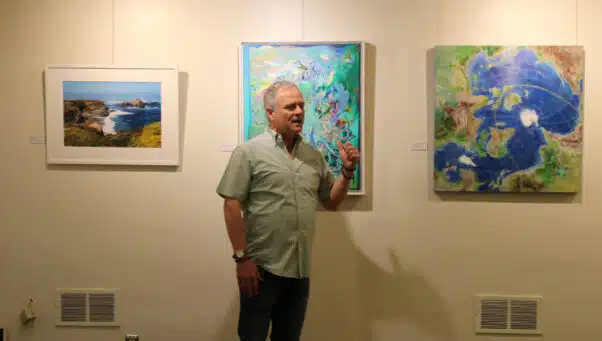
That is the overarching message behind “WE THE PEOPLE: Preserve Our Right to Clean Water,” a new fine art exhibition at the Fairmount Water Works Interpretive Center that connects the city’s environmental history with one of today’s most urgent civic responsibilities to protect access to clean water.
This is the 4th annual Spring Fine Arts Exhibition at the Fairmount Water Works Interpretive Center.
Curated by Thom Duffy in partnership with Karen Young, director of the Fairmount Water Works Interpretive Center, the exhibition uses art to explore water as a public resource, a constitutional right, and a shared civic responsibility.
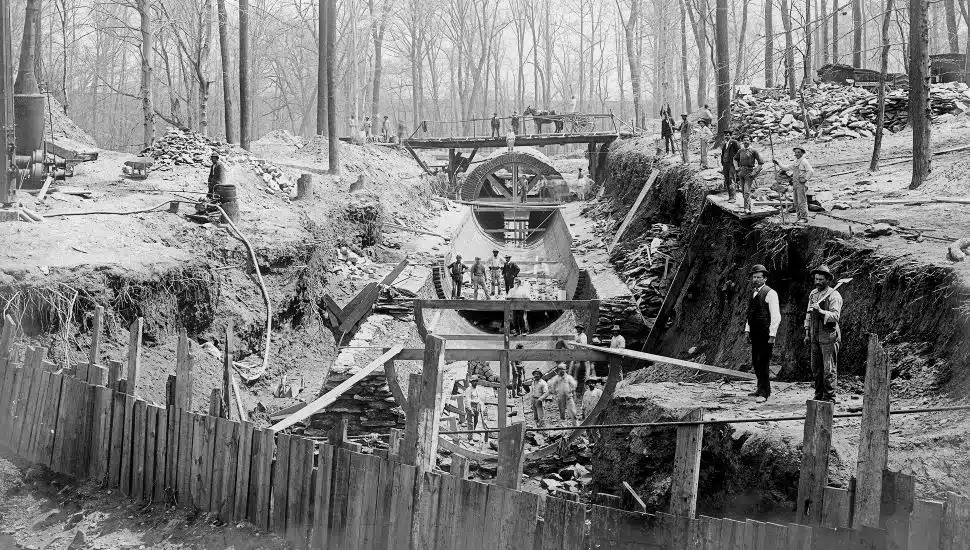
For Duffy, the Fairmount Water Works is central to the story.
He noted that the site “was engineered out of the dire need for Philadelphia residents’ access to clean water.”
That history gives the exhibition a natural home.
Meanwhile, the timing is just as urgent, with the nation preparing to celebrate its 250th birthday.
The theme of demanding rights and protections for clean air, land and water is also connected to Pennsylvania’s Environmental Rights Amendment, which states in part, “The people have a right to clean air, pure water, and to the preservation of the natural, scenic, historic and esthetic values of the environment.”
That civic idea is expressed throughout the exhibit.
Painting the Picture of Clean Water
Duffy put together an impressive collection of artists for the exhibit.
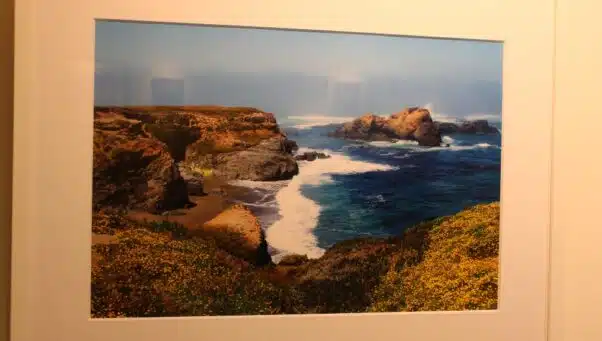
The participating artists are locals with Philadelphia roots and personal connections to the Schuylkill River, Schuylkill River Trail, or the Fairmount Water Works itself.
“Many of the works in [the] WE THE PEOPLE exhibition are beautiful imagery capturing the essence of clean water while others offer the contrary,” Duffy told PHILADELPHIA Today.
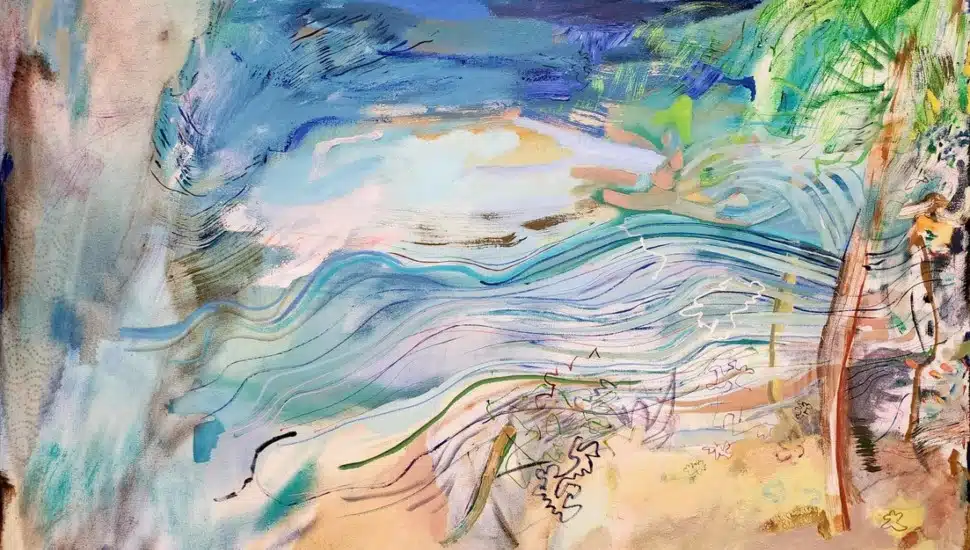
This year’s exhibition includes a special site specific installation by artist Amie Potsic.
Titled “Rising Tides,” the installation flows overhead throughout the Main Exhibition area of the Fairmount Water Works Interpretive Center.
In her artist statement, Potsic says the work transforms images of the sea to highlight the shared desire for clean water coast to coast, while calling attention to the need to protect oceans, rivers, and streams.
“Our oceans, rivers, and streams are integral to our communities, our health, and our connection to the environment. We, the people, have the gift of being nurtured by our seas as we are called to protect and steward their future,” Potsic added.
Meanwhile, artist Emily Brown’s work approaches water as an entity that is both physically and emotionally beneficial.
Her statement references farms, gardens, hot showers, cold drinks, clean dishes, swimming, and boating as examples of ways that water “serves our spirits” and remains an essential part of daily life.
Other works tell different stories.
For instance, artist Robert Reinhardt’s piece includes the use of water themed imagery that is reminiscent of the historic water wheels that can be found at Fairmount Water Works.
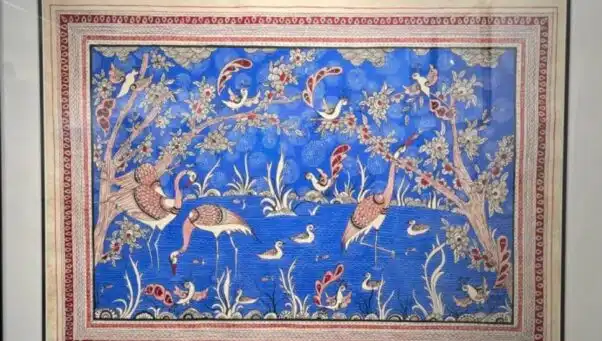
“Heron,” by artist Rinal Parikh is a colorful display of wildlife gathering together around the water, which Duffy said, “speaks to me of diverse communities coming together” and as “something humanity could always afford.”
The exhibition also includes two paintings produced by Duffy himself.
One piece is titled, “Crimes To the Environment,” and represents a river polluted with tires and plastics while clouds float heavily above it.
It was inspired by a 2023 WHYY article that reported on the delay of the Schuylkill River dredging project after 3,000 tires were found illegally dumped near Strawberry Mansion Bridge and Boathouse Row.
“The story still haunts me,” Duffy said.
Art As Civic Action
Art’s impact on people is vast, far beyond something that is simply aesthetically pleasing.
It can move people on things like environmental issues in ways that data alone may not.
As a longtime curator, Duffy has a clear and succinct idea of what a curator does.
“Curators tell stories through art, artifacts, literature, fashion or anything that speaks to a topic and how it relates to a story needing to be told,” he said.
He often selects works that invite viewers to enjoy, but also to think about, discuss, and engage with one another.
“There are times when I push the ‘fit’ challenging viewers to look deep and ask questions to discover the connection of the art to the story,” Duffy said. “This makes for living discussions and opening a space to share personal thoughts and observations for all.”
For this exhibit, the story is about not only clean water, but also about access, protection, care, and action.
Duffy’s hope is that those who experience the exhibit will be “motivated to do their part in Preserving Our Rights to Clean Water.”
Some tangible ways to do so include reducing the use of plastic, composting, becoming involved with community efforts for park and neighborhood beautification initiatives, supporting environmental organizations, and more.
“Support in a way that works for you,” Duffy concluded.
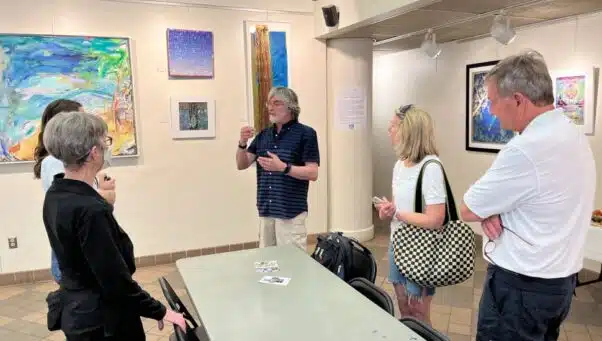
“WE THE PEOPLE: Preserve Our Right to Clean Water” will remain on display through Aug. 1, 2026 at the Fairmount Water Works Interpretive Center.
Meanwhile, free curator and artist talks will be held on select Saturdays until then. To learn more about the exhibit and the venue, visit http://fairmountwaterworks.org/.