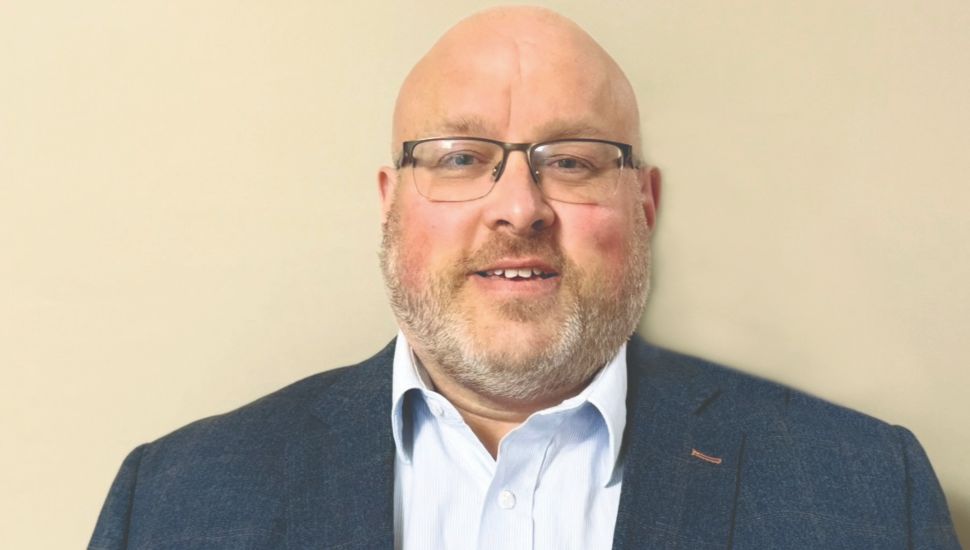
Andrew Storti, Chief Investment Officer of Brumbaugh Wealth Management, spoke with PHILADELPHIA Today about growing up in Phoenixville.
He recalled playing baseball in his local youth leagues and ice hockey for his small Catholic school and proudly working weekends and summers at his family’s restaurant.
Wanting to continue his education in a similarly close-knit Catholic setting, Storti attended Cabrini University and graduated summa cum laude with a double major in Finance and Accounting.
Today, at Brumbaugh, he and his mentor-turned-business-partner are focused on providing clients with the human connection, guidance, and care they deserve from their financial advisors.
Where were you born, and where did you grow up?
I was the youngest of seven kids born in Montgomery County Hospital in Norristown and grew up in Phoenixville, near Kimberton. My parents still live in the same house I grew up in.
What was your role in the family as the youngest of those seven?
Well, by the time you get to number seven, the joke is, “We don’t care what you do. Just come back home at some point.”
What did your dad do? What did your mom do?
My dad owned a restaurant that he bought in 1972. It was seven days a week, 14 or 16 hours a day. By the time you woke up in the morning, he was already out of the house, and he wasn’t home by the time you went to bed.
On Sunday, he would go to church with us, but then he would go to the restaurant for the rest of the day. He did what he had to do to run a business and support his family.
We were raised in that restaurant. We’d be taking naps and completing our summer reading lists at the tables.
My mom’s main role when we were kids was raising us, but she did several different jobs throughout her life. As I was growing up, she did in-home childcare for other people’s children, too.
Later, she worked at Genuardi’s grocery store and eventually made her way to Vanguard, where she worked until she retired.
What memories stay with you from growing up in Phoenixville?
We went to Catholic school from kindergarten through high school, and in summer, we played outside every day with the neighborhood kids. Stickball, roller hockey, those types of things.
It was very much a traditional childhood that I would say kids nowadays don’t have. And Phoenixville is much different today than it was when I was growing up, as it has become a much more popular place to live!
Did you get into sports early?
I played baseball every year from age six on with KYAL and then with the Babe Ruth League. I played catcher and second base the most. In high school, I got into ice hockey.
Where did you go to high school?
Saint Pius X in Pottstown.
Were you any good at baseball or ice hockey?
I’m a pretty good athlete. I played catcher and made a handful of all-star teams over the years.
How young were you when you realized that people looked to you as a leader on the field?
I didn’t realize it at the time. My thing was playing hard. As I got older, I got to a point where I was willing to take on more of a leadership role and help people focus on, “Hey, we want to have fun, but let’s try to win. Let’s do this for each other.”
But I didn’t think of myself as a leader in sports.
Is there a baseball or hockey game that stays with you as if it happened yesterday?
My very last baseball game. We had to win to get into a championship, and we were losing, 2-0.
I led off one inning with a double, but then I got stranded on second base. We didn’t score, and as a team we struggled all game. In the final inning, I led off the inning and ended up getting out.
The next batter hit a triple, and I still think about how, if I had just gotten on base, I could have scored, and then who knows what happens from there?!
What about jobs? I imagine you worked in that restaurant?
Oh, yeah. I think I was 13 or 14 when I officially started working there. I wasn’t on the books, but my dad would pay me 50 bucks a week. You didn’t argue. You just took your money, and you were happy about it.
It became my life. When I was in school, I would work Friday night, Saturday, and Sunday.
In summer, I would work five, six, and seven days a week. But it was fun, because you’re working with people you like, and I got money in my pocket.
What lessons did you take from that experience in the restaurant?
You learn a lot about how to deal with people in the restaurant business. It’s that one-on-one connection that unfortunately doesn’t happen much among younger people today.
Also, being the owner’s son, I learned a high level of pride in the business. You want to do a good job for the family business, and you want other people to look at it as fondly as you do.
I took more ownership than the teenager who just wants to make some money and could take or leave the specific job.
There were stretches when I would work two weeks in a row without a day off. Even if it’s not necessarily what I want to do on a particular day, it’s like, “This is what I have to do.”
To me, that’s how you build a work ethic. It was so valuable for me. I’m adamant that my daughters will work when they’re teenagers and get that experience.
What music floated your boat in high school?
Matchbox Twenty was my favorite band in high school. In college, I got into The Killers. That genre was what I liked back in those days.
As I got older, my taste got a bit more diverse.
Did you go to any concerts when you were growing up?
My first concert wasn’t until my senior year of high school, but I got into concerts later. I saw Matchbox Twenty and The Killers a bunch of times.
You had a good work ethic and were a good student. You could have gone to college anywhere. Why Cabrini?
It’s funny you say that. I was a good student in high school, but I didn’t have to apply myself much. I could do homework in homeroom, maybe study a bit, and do really well.
I didn’t apply to a lot of schools, and I had to pick a college at the last minute. There were some parameters I wanted.
I wanted to live at college but stay local enough to come home whenever. I wanted a smaller school, because I was used to smaller classes.
My eighth-grade class had 15 kids. My graduating class in high school had 123. And I liked the idea of going to a Catholic college, because of how important my faith is.
Cabrini checked all the boxes. I applied, and they accepted me. I honestly didn’t even go visit it.
Looking back, was it a good choice for you?
It was absolutely the best choice for me, for a variety of reasons. I was a good kid, never got in trouble, worked hard, got good grades even though I was lackadaisical about it, but I remember my mom said, “Andrew, I’m worried about you going to college.”
What was she worried about?
That I wasn’t taking it seriously enough and didn’t apply myself as much as I should have. I never forgot that. So, when I did get into college, I did the opposite of what I did in high school.
I applied myself from day one, and I graduated summa cum laude.
Cabrini was fantastic. I had great teachers and advisors.
What did you major in?
I went in as a Finance major. I wanted to work with money in some capacity. I picked up Accounting as a minor in my freshman year and then took it on as a second major.
I also worked on campus. I was a Tutor, a Peer Educator, an Orientation Leader, and an RA. I joined so many groups and organizations.
I studied abroad in Rome during the fall semester of my junior year. It was the best thing I’ve ever done in my life.
Looking back over your career, who are the people who saw promise in you?
Kim Brumbaugh was and is my mentor.
I almost didn’t get into this business. In the fall of my senior year of college, I hadn’t had an internship yet. I had classmates who were getting paid a lot to work on tax returns as interns, so I went to the same accounting firm, and they offered me not an internship but a full-time job after graduation.
Having that set up six months ahead of time would have been great, so I was very close to taking that job. If I had, I might not have met Kim, but I didn’t take it, because they wanted me to be an auditor. I wanted to get into more of a wealth management investment type job, or a corporate finance role, the CFO route, something like that.
How did Kim find you?
In the spring of my senior year, my sister knew someone who was working with Kim at MetLife at the time, and he offered to get me an interview there.
I took him up on it and went through the whole process, and one of the interviews was with Kim. They wanted me to help Kim with her clients while I learned the finance side of the business from her.
Vanguard also offered me a job, but I went the route of becoming a Financial Advisor, and the rest is history. Kim and I are business partners today in our own firm.
How long have you been working with Kim?
Since 2005.
What do you think she saw in the raw Andrew Storti back then?
If I had to answer for her, I think she saw a hard worker, a good person, who cares about the business and about people, and would take the job seriously.
Here and now, in 2026, what are your biggest challenges and opportunities?
Obviously, the big thing that’s impacting everyone right now is AI. We need to reconcile with how our clients are utilizing it and how we can utilize it effectively ourselves.
There’s a wealth of information that AI can bring to the table in our business. It provides opportunities for new processes that we’re incorporating. At the same time, things we would typically work on with our clients are now at their fingertips. It changes things.
One advantage we still have is that this is a relationship business. AI can’t replace human connection, and that connection is necessary, especially as people get older.
That’s not to say that older people don’t use technology, because they do, but our world gets more complicated with every passing year, and the older we all get, the more we need a person who can advise us, answer our questions, and be that resource.
What are you doing as a firm to keep those relationships front and center?
Communication is so important. We’re very proactive with reaching out, letting people know we’re here for them. We make sure our service level is top-notch, so people realize that we care about them and they can trust us. That’s what it’s all about. Being sincere, honest, and operating with a high level of care.
What do you do with all that free time that you have?
I’ve got two young daughters, nine and six, so they keep us busy, but thankfully not too busy. They’re not into travel sports, which is fine with us, but they have their after-school and weekend activities.
My wife and I both work full-time, so helping them with school work is your night job, after you get home from your day job.
I also work out a lot, which means going to the gym at 5:00 AM or 9:00 PM, because the rest of the day is full of work and family responsibilities.
Do you read much?
I read a lot to educate myself. I don’t get a lot of time to sit with a book, unfortunately, but I read a ton of world news, business-related content, and historical accounts. I’m a non-fiction reader. I read anything where I can learn something new.
What was the last good book or article that you read?
I’m currently reading a fascinating book about the Vatican’s role during World War II. Kind of a subtle, more covert operation against Hitler and the Nazi regime.
Three last questions. What’s something big that you’ve changed your mind about over the last 20 years?
In college, I thought I could be happy doing anything as long as I made good money, but I realized early on that it doesn’t work that way.
You’re going to be working 40 to 45 years of your life. You have to be happy with your job, or life’s not going to be good.
You have to believe in what you’re doing and feel like you’re making a positive difference, and be happy, regardless of income. The money will come. Let that take care of itself.
It’s a crazy world. What keeps you hopeful and optimistic?
When you’re rooted in faith and values, that keeps you anchored and allows you to look past the craziness, because at the end of the day, there’s something more than what you’re seeing play out on the news.
And, obviously, family. I love having daughters. I love being a girl-dad. I never realized the power of children before I had them.
Also, I love the work I get to do. Being able to help people in this job is so gratifying and fulfilling.
I got a fantastic thank-you email just yesterday, and that’s the kind of thing that keeps me centered, knowing I’m in the right job and get to help people and being able to be that resource that people depend on for themselves and their family.
Finally, Andrew, what’s the best advice you’ve ever received?
One of my favorite shows growing up was Boy Meets World. Mr. Feeny, the Principal, was always the voice of reason. In the final scene of the series, he gives the kids one last piece of advice: “Believe in yourself. Dream. Try. Do good.” I have that on a canvas in my daughter’s bedroom.
Another line that always resonated with me is from a movie called Rounders. We’ve done so many personality tests in our office to understand how each of us is hardwired, and I’m a more conservative person, slow to change, and analytical. That’s why Kim and I are so good, because we balance each other out. She’s the visionary. Kim has these ideas, and I’m like, “I need to see the numbers. I need to analyze everything over and over before I can feel comfortable.” So Kim helps to push me forward when I need it!
Rounders is a great poker movie with Matt Damon, Edward Norton, and John Malkovich. The main character’s whole approach to poker is to protect what you have, think things through, and not do anything risky. Be more careful and calculating, which is how I am.
One of Matt Damon’s philosophies in poker is, “You can’t lose what you don’t put in the middle.” He is referring to protecting what you have, not doing anything too risky, and playing the odds that are in your favor. In his final poker game of the movie, he has to decide whether to take his money and go or continue playing. And he says to himself, “You can’t lose what you don’t put in the middle… but you can’t win much either.”
So, yes, I need to calculate and be analytical, and I am naturally more conservative. But this quote is my reminder that if you want to advance yourself and achieve great things, sometimes you need to make some of those risky decisions, too, and believe in yourself and take a chance.
____________________
Registered Representatives offering securities through Cetera Wealth Services, LLC, member FINRA/SIPC. Advisory Services offered through Cetera Investment Advisers LLC, a registered investment adviser. Advisory services also offered through AdvisorNet Wealth Partners. Cetera is under separate ownership from any other named entity. 717 Constitution Drive, Suite 202, Exton, PA 19341 | 610-458-2495.