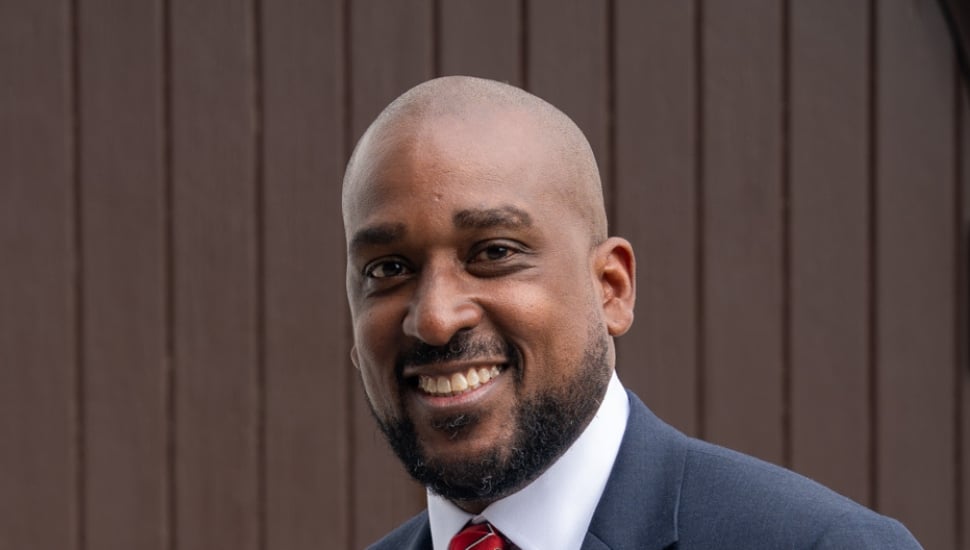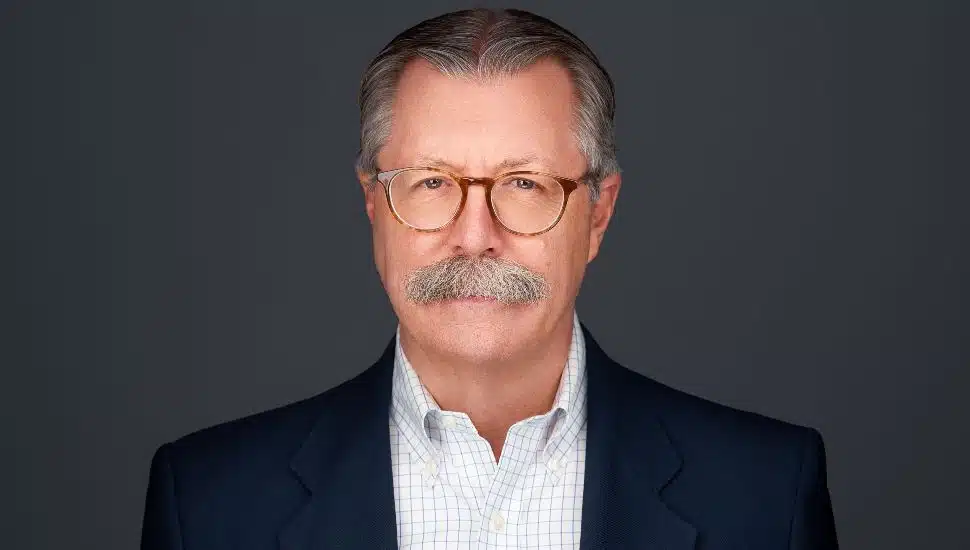
Keith Sterling, CEO of Habitat for Humanity MontDelco, spoke with PHILADELPHIA Today about how he came out of retirement during the quarantine: What started with his reaching out to help build affordable homes for his community ended up with his becoming a nonprofit CEO within a year.
Sterling came to Habitat for Humanity with an already impressive resume as a land and apartment developer, as well as a knack for creative problem-solving, which serves him well in the nonprofit sector, where outside help is hard to come by.
He’s now working to strengthen Habitat for Humanity’s position as a leader in the fight for affordable homeownership and set up the next generation of nonprofit leaders for success.
Tell me about your first job. What did you do?
My first meaningful job was at Howard Johnson’s on the Pennsylvania Turnpike in Valley Forge when I was 15.
I started as a busboy and then got a chance to cook. I took to it, and all through high school, I was running the kitchen on weekends. Weekends were the busiest during the summer, because that’s when they would run the buses up to Hershey from Philly, and we were the rest stop on the way home.
The assistant manager would run in and tell us to roll up our sleeves, because we had three buses pull in the parking lot and 150 customers who wanted to eat in the next 30 minutes.
What are the top three lessons you took from that job at Howard Johnson’s that still influence you today?
Number one is leadership. The restaurant had a manager who wasn’t actively involved and an assistant manager who did everything. I learned that, if you want the right culture and environment for people to work in, you can’t just sit in your office and give orders. You’ve got to be willing to go out there, make sure everyone is meaningfully engaged in the work, and show up to be part of it.
Second was the ability to deal with pressure. There were so many pressure situations. For a 16-year-old kid to experience that, it carried lifelong lessons to be prepared for whatever came your way.
The last one was attention to detail and always striving to do your best. Being chewed out by a widowed server when you’re 16 is not fun, but you learn that if you don’t do things right, it affects everybody. Being able to learn that a large part of her livelihood was dependent on my cooking was an invaluable way to connect the dots about the interconnectivity of us all. Being able to see a larger picture than just yourself in an organization was a critical lesson for me.
So, you get through college. Who gives you your big break? Who sees something in you and spots that you’re different from other people?
The first experience was in college when the head of our Economics department asked me to be his office assistant. I wasn’t the best student in any class, but he saw something in me that he trusted to represent him when he wasn’t available.
When I graduated, I went to work for PSFS. They did hirings each year for college graduates, and they had an outside industrial psychologist vet candidates. This interview process was not simply answering 20 questions, but rather a whole day of tests and multiple interviews.
So, they called me back in and told me I had an overwhelming aptitude for problem-solving, so they placed me in theirsystems group.
I don’t know whether that industrial psychologist actually knew what he was talking about, but I think, when you’re young and impressionable, you grab at any positive feedback you get. I built my life around that synopsis of who I was, and I became a lifelong learner to be better at helping others solve problems.
I’ve read over 500 books on human nature and business, just because someone many years ago determined my personal value proposition, and I wanted to deliver the goods for them. The irony is that you learn quickly it’s impossible to consistently be the smartest person in the room, but if you are willing to try and be the most knowledgeable person with a unique skillset, the opportunity to stand out will always exist, so I studied everything.
What’s the best advice you took out of all those books?
Out of all 500, one book I would absolutely recommend is The Laws of Human Nature by Robert Greene. It gives you insights into things most people wouldn’t even think about in the normal course ofinteracting with other people. And in an increasingly connected world, seeing beyond your work to the people you’re interacting with just makes life a whole lot easier.
But more generally, the thing I took out of all of that reading was that, averaging about a book a week, 50 books a year, the ability to absorb and learn from that is only circumstantial, in that memory was playing too big a role in using what I read.
So, I went back and reread the first 50 books. I highlighted them all. I built a database on my computer with over 250 categories of different topics that were relevant to me. I now have over 10,000 quotes that I can access when needed.
I read them every year, and I edit. There are things I highlighted 20 years ago that I’m like, “What was I thinking?” But I add maybe 500 quotes a year out of all the literature that comes acrossmy desk.
How did you end up at Habitat for Humanity?
I sold my companies in January before the pandemic hit. March rolled around, and I became a hermit for almost two years, as everybody did. Going to the grocery store was a big outing.
As things started to ease up and vaccines became available, my wife sensed my boredom and encouraged me to get back out there and give back what I’ve accumulated to someone who could use it. So, I took her advice and sent my resume to Habitat and several other nonprofits. I always loved real estate, and my resume landed in a place where a need existed for someone with my skill set, so I was hoping someone at Habitat would see value in my resume.
It was another one of those kismet moments that occur over the course of one’s life, and I was fortunate to be hired as Director of Operations to help get the affiliate in a position to accomplish more. It was a real chance to give back, and I’m eternally grateful that my predecessor gave me that opportunity. And a year later, I became CEO.
What do you think she saw in you? What did you bring to the table that a 40-year-old couldn’t or didn’t bring?
To be perfectly frank, she took a risk bringing in a retiree, but I suppose my resume stood out by comparison to others she was considering based on what they wanted to pay for the job. I bought 11 businesses. I rezoned on massive tracts of land. I developed over 2,000 apartment units. So, even if I lost a step, it was a calculated risk on her part to see if I could make a difference.
What’s the biggest difference for you, being involved in a for-profit versus a nonprofit?
I tell everyone that will listen, running a real estate nonprofit is three times as hard as the real world, but 100 times more rewarding. It’s the difference between putting together a 50-piece jigsaw puzzle versus one with 500 pieces.
When I was an apartment developer, I would call a real estate broker and say, “Find me a tract of land to buy.” I’d go to my loan broker and say, “I need financing for this.” I’d go to my lawyers and say, “I need documents.” The architects, engineers, and consultants were at the ready to make it happen. An entire network of professionals was waiting for you to start the process.
There’s nothing even close to that waiting for you in the nonprofit world. It’s harrowing to figure out how you’re going to make all this happen. You’ve got to have the right people, the right hustle, the right everything.
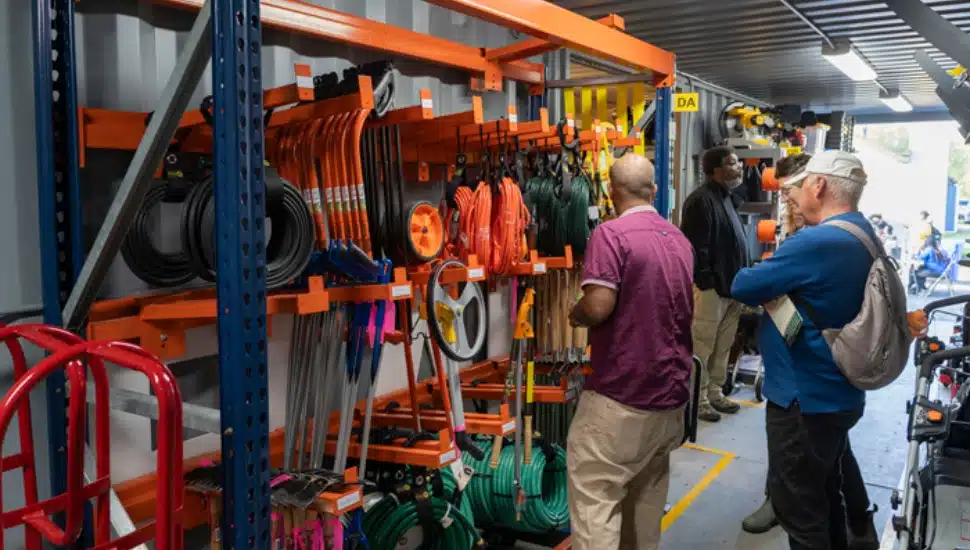
We run a side gig here called our Habitat for Humanity ReStores. We have one in Norriton and just opened a new 44,000-square-foot ReStore in North Wales. People line up to get into that store and buy thrifted goods from us. That net income really helps, particularly when you can’t count on government grants.
But this is the greatest example of a community coming together to make a difference. People and businesses from the community donate items to sell, people from the community come and purchase those donations, and we use the net proceeds to build homes in our communities. It’s truly a sustainable cycle of giving to help others. Our ReStores alone allow us to build or rehab three homes each year.
We are also blessed to have a wonderful Board of Directors, led by our Chair, Joe Kernen, and Vice-Chair, Mary Metz, who relentlessly give their time and energy to help us make a difference in combating the affordable housing crisis.
You’re using that unique ability to solve problems.
It helps. It decreases the likelihood of failure because when you’re solving a problem, you identify potential solutions, and you go, “What could fail with that solution?” Creating affordable homeownership opportunities is an incredibly complex problem, not just for us, but for the whole country. Every experienced swimmer can tell you that when you’re caught in an undertow, the solution isn’t to swim harder, but to change course. Unfortunately, the only real way to solve this problem is through leadership, as that can overcome the parochial interests of local interests, suppressing supply.
But the real requisite for nonprofit work is having the talent to create something out of nothing.
So, here we are at the beginning of 2026. What are the challenges that you’re working on and excited about?
We have a great team here. They are the long-term solution to the housing crisis in Montgomery and Delaware counties. I simply want to put them in a leadership position to build that solution when the opportunity presents itself to do more. The more recent members of our workforce deserve the same opportunities we enjoyed in providing financial security for their families through homeownership.
I have some short-term goals. I want to build our cash reserves to help them feel secure in a time of uncertainty. But anything I might suggest as a short-term goal for me, the ultimate success of that would be for us to assert ourselves in a leadership role to make this happen. Every member of our team is focused on outreach to put us in that position.
We deal with 105 jurisdictions in our two counties regularly. They are the gatekeepers as to what gets built in their communities. We can’t succeed unless we’re perceived as a trusted leader, and we can convince them that their long-term success as a community is dependent upon affordable homeownership.
It is important to differentiate between affordable housing and our niche of creating affordable homeownership opportunities.
There’s housing for the homeless. There’s short-term housing for people in need. Then there’s the longer-term need for subsidized housing for the family that can’t earn enough to have a decent place to live. There will always be a need for those people who have had a less fortunate path through life.
But our little piece of it, affordable homeownership, is critical to the long-term health and welfare of any community. We have to be the apostolates out there, preaching the reality of the situation, because it’s not within our nature to comprehend the implications of the devastating effects this missed opportunity to build generational wealth will have on families over the next 25-plus years.
What gives you hope daily that we’re grasping it and that there will be a solution?
I don’t know if there’s an answer to that, because there is no one solution. I have four books that I’m reading right now, all written by verybright people, and they all think they have the answer, but they probably don’t.
The uniqueness of our situation is that 105 jurisdictions are unlikely to work together to solve any crisis that isn’t immediately life-threatening. My counterpart in Collier County, Fla., builds over 50 affordable homes each year because planning and zoning are handled at the county level, where the need and benefit for workforce housing is more clearly understood.
Everybody can see the need for affordable housing, but when it gets down to the local level, and your self-interests are at risk, are you still willing to understand? Are you still willing to help that nurse, ambulance driver, or police officer? Jerusalem Demsas wrote a book titled On the Housing Crisis and a chapter titled “The Billionaires Dilemma,” which goes into great detail of a wealthy Californian who put his money where his mouth was to support affordable housing… until the affordable development was proposed near his exclusive neighborhood and banded with his neighbors to block the development.
We see the hypocrisy of this mindset all too often. Understanding the vagaries of human nature is an important ingredient that is all too often left out of the proposed solutions.
Who’s an example of the opposite? Can you think of anybody who is putting their own personal well-being on the line to help solve the issue?
The Montgomery County-based Morgan Properties is the first or second largest owner of apartment units in the country, and I’m talking to you right now from an office we rent from them at half market rate. It’s where their family started building their company 40 years ago, and we hope to have some of that success rub off on us.
One of Morgan Properties’ senior officers is on our board of directors. They’re doing everything to help us take the next step in doing more for our counties. Steve Waters, their Chief Capital Officer, is opening so many doors.
They’re hosting our gala in September at their new headquarters in Conshohocken, and we titled it Under One Roof in their honor, as here is a company dedicated to investing in rental properties, but gives and gives to help us provide homeownership opportunities in the community we serve.
They are the shining example of people who get it.
What’s the biggest crisis looming on the horizon for you?
I don’t think there’s a crisis for me. There’s a crisis for affordable homeownership, and it’s bigger than me. I can’t solve it. Habitat can’t solve it. Habitat has to take the leadership role of making people aware of the problem, but we need the cooperation of local jurisdictions and the private development community to make any real difference.
We’re working with private developers now on land use parcels, where we’re able to get the land at a reasonable price, and they’ll provide the infrastructure for us.
Over the last five years, 25,000 people have left Philadelphia. In the same period, 25,000 people have moved into Montgomery County. So, if somebody is not providing homeownership opportunities for these people, we’re just going to jam more apartments into the economy. And what’s that going to do?
We’re working on engaging the private sector to help buy apartment complexes that can be converted into condos. How simple is that solution? It would take us 10 years to build 300 units. But if we buy one apartment complex and convert it into condos, we’ve just provided 300 homeownership opportunities.
We can’t start at that level because we don’t have a track record that would give us access to Wall Street-level financing, but Morgan Properties is allowing us to access their professional resources to identify some smaller complexes to convert right now.
To sit back and think the government or the private sector is going to do this on their own is foolish. As a nonprofit, you have to bring the resources together to make it happen, so you’re constantly in pitch mode, thinking, “What can I do to get all the players to benefit and embrace building affordable homes?”
Last question for you. If somebody wants to help Habitat for Humanity in Montgomery and Delaware County, what can they do?
Our volunteers are the biggest asset that doesn’t show up on our balance sheet. If you want an opportunity to meet some of the greatest human beings you probably haven’t met in your life, become a volunteer at Habitat. They make a huge difference in helping us control our costs so we can do more for the community. There are days I choose not to be the CEO just to work alongside them to feed off the benevolent nature of people who give their time so freely
You can also donate products to our ReStores. You can shop at those stores. You can donate funds directly. You can become a board member or committee member and open doors for us.
For businesses, we have Build Days on our construction sites. Your business can bring a check for $5,000 and 10 people to work for one day, and it makes such a difference to the cost of a home. There are so many ways to participate and benefit your community.
________________
Publisher’s note: Helen Harris contributed to this profile.