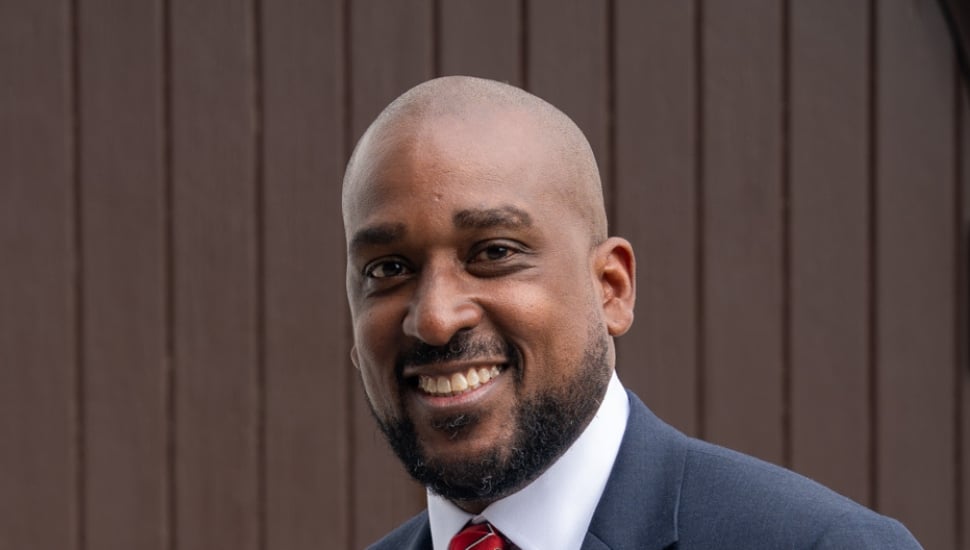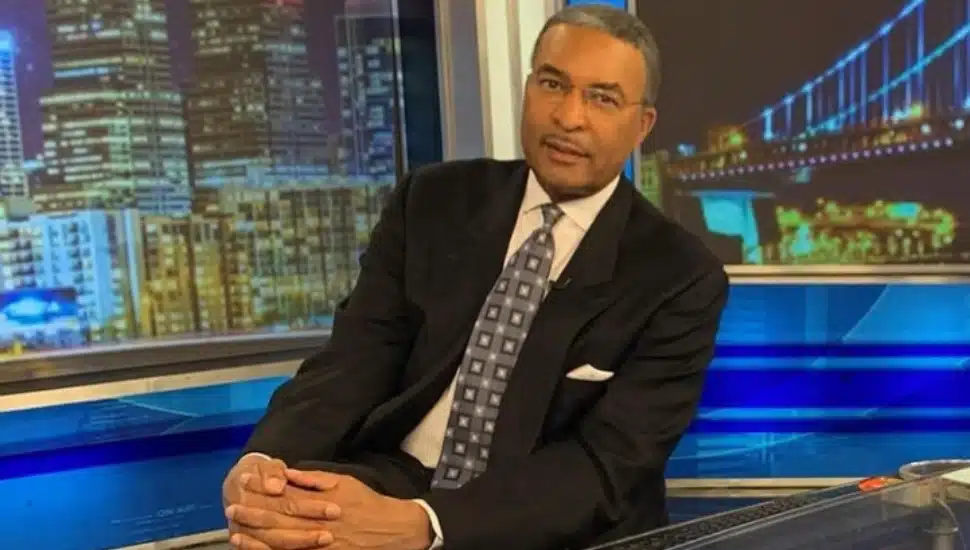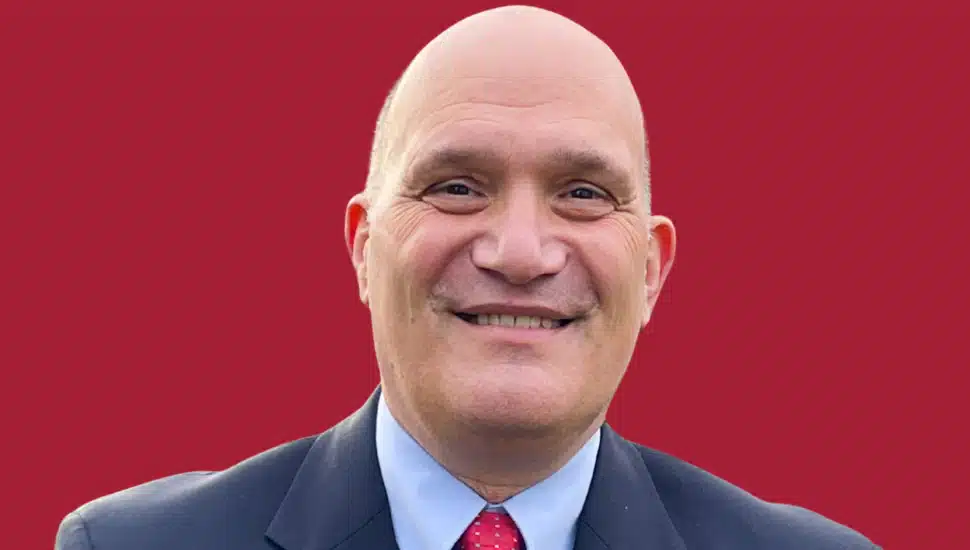
Todd Reeves, Executive Director and CEO of Overbrook School for the Blind, spoke with PHILADELPHIA Today about growing up in Oregon, where he picked pole beans to help pay for his school clothes, played baseball, and fervently pursued his academic goals.
After studying Speech Pathology at Pacific University and choosing a career in Special Education, Reeves made the unconventional decision to attend law school as well. The skills he gained there aid him every day in advocating for the Overbrook School for the Blind, its 180 enrolled students, and the hundreds of other children in the Philadelphia area with visual impairments.
Where were you born, and where did you grow up?
I was born in Portland, Ore. We moved to Eugene when I was 11, and then I went to college not very far away.
What did your mom and dad do?
For the first half of my childhood, my father worked in the post office, and my mother was a homemaker.
For the latter half, he worked in insurance, and she was a secretary for a county dental society.
Where were you in the pecking order?
Youngest of two. My older brother, who is two years older than I, is a retired police officer in Eugene.
What do you remember about growing up in Eugene?
I was a baseball fanatic, and in Portland, they had a formal Little League with three beautiful, manicured fields. When we moved to Eugene, they just had the community sports organizations. I remember feeling like I moved from the “big” city to a small town, playing in a dirt field.
But all the way through, both in Portland and Eugene, I felt blessed that I was going to a good school.
What drew you to baseball?
At the time, Eugene was the AAA affiliate of the Phillies, so I’ve been a fan for life, on both coasts. But I was also a fan of great, individual players. Bob Gibson, of the Cardinals, was a formidable pitcher. He controlled the mound. I was always inspired by people like him, who may not have had a lot of gifts or opportunities or an enriched life early on, but they were able to achieve because of their sense of commitment.
What position did you play in baseball?
Second base.
Do you have a favorite game that you remember?
I played baseball all the way through high school, but my favorite was in middle school, the first time I turned a double play.
What about jobs? Did you work when you were in high school?
My first summer job was when I was 12 years old. I worked in the farmlands outside of Eugene, picking pole beans. I had to purchase four pairs of pants, four shirts, and two pairs of tennis shoes for the next year of school. I remember trying to earn that money as fast as I could, so I could quit and enjoy the rest of the summer.
By the end of the day, I could not sit down. My rear end was so sore from standing up and sitting down on a galvanized pail as I worked my way up and down the poles. But I got that money.
Where does that drive come from?
I knew exactly what my goal was. Once that happens, then it’s laser focus.
Did your parents imbue that in you, or were you born that way?
I think it was the entire environment around me. My mother would actually worry that I was too focused on academics, too type A, not getting a balanced life.
What kind of music were you listening to in high school and college?
I was all about that Top 40 rock.
My vivid memory of high school is going to a Boston concert in McArthur Court, which was then the University of Oregon’s basketball arena. It was my senior year of high school, and a friend I went with, Mike Walter, had decided he wanted to end his high school career by playing football for one season. It was a Thursday night, and the football games are on Fridays, so he had a self-imposed curfew, and we had to leave before the encore even started. I was aghast.
Mike turned out to be a phenomenon. He played for the 49ers alongside Jerry Rice and ended up with a fistful of Super Bowl rings. But, still, I can’t help wishing we’d stayed for the encore.
Were you in Eugene when Steve Prefontaine was there?
I distinctly remember the night he died. I go back to Eugene, and I see all of the Nike money, but I cannot go inside their new track stadium. I can’t think of being in a stadium made of cement when I have those memories of watching Prefontaine’s bell lap from the rafters of Hayward Field. The wood would bounce as people were jumping up and down.
Where did you end up going to college, and why there?
I went to Pacific University in Forest Grove, because initially, I wanted to be a physical therapist. In the Pacific Northwest, that was the only school where you could do that from start to finish. But I ended up changing my major my first year there. I realized that speech pathology had more versatility and career opportunities.
Did Pacific end up being a good choice for you?
Yeah. It was a smaller school. You knew everybody. It was a good bridge between the high school I went to and a larger university. And it was close enough that I could hitch a ride home.
When did you decide to go to law school?
I wanted to become a teacher of the deaf, and Lamar University in Beaumont, Texas, had just received these grant funds, which basically paid for my master’s degree, so I went to Lamar. While I was there, professors encouraged me to take the LSAT, and I did surprisingly well.
I spent five years as a speech pathologist at the Washington School for the Deaf, and I was able to have all of my student loans forgiven that way. Then, I applied to the University of Washington School of Law, because they had a linked program with the College of Education.
There aren’t many educational administrators with law degrees, so every once in a while, someone will ask if I regret it, and I don’t. I use it every day at work. But I do tell people, if you graduate from law school and you go into educational administration, you’ll have people around you proving to you that you are not that smart. You don’t know everything.
Who were the people who saw promise in you and gave you opportunities?
The person I credit with investing in me, even though I probably didn’t have sufficient credentials to warrant the trust, is Governor Gary Locke. He appointed me as superintendent at the Washington School for the Deaf, the same school I’d started at as a speech pathologist 10 years earlier. I was working as director of special education in Tacoma at the time, and the Washington School for the Deaf was roiled in controversy related to student-to-student sexual abuse.
Legislators in Governor Locke’s own party were advocating closing the school. It would have been the political path of least resistance. But he took a chance on somebody who had never sat in the superintendent’s chair before.
What did Governor Locke see in you? Why was he willing to take that risk?
His initial question in my interview was, “Under these circumstances, why would anybody take this job?”
My answer was, “Because sometimes you have to follow what leadership demands.”
I still don’t know whether that’s a very convincing answer. But the funny thing is that, two years after Governor Locke appointed me, he term-limited out and was replaced by Governor Christine Gregoire, a very accomplished attorney general and leader in nicotine litigation.
Then, President Obama appointed Gary Locke as Secretary of Commerce. This was 2008, right after Wall Street tanked. I wrote him a note and said, “Under these circumstances, why would anybody take this job?”
Who else saw promise in you over your career?
Rick Wheeler, the first board president I served under at Overbrook School for the Blind.
In 2016, my predecessor here was about to retire, and I was asked to apply. I said no, because I felt I was already in a comparable position at our sister school in Pittsburgh, the Western Pennsylvania School for Blind Children. But then I realized that they were moving into a phase at WPSBC where they’d had enough change and were looking to create stability. And I’m always driven by seeing how much change I can be a part of.
OSB contacted me again in February, and I said yes. They had all the reason in the world to move on past me. It’s the first organization that knocked on my door twice. A lot of people don’t get that opportunity once.
Give me your elevator pitch of what Overbrook School for the Blind is about.
It’s incredibly multifaceted. A lot of people don’t know what an “average” school for the blind is like, but once you find that out, and you learn about Overbrook, you realize it’s anything but average.
We’re committed to educating students with blindness and additional disabilities, ages 3 to 21, to help them reach their potential and have positive post-school outcomes. Our passion is giving them a springboard to assume their rightful place in society.
We have teachers of the visually impaired. We have orientation and mobility specialists. We have occupational therapists, physical therapists, speech language pathologists, nurses, and a whole complement of staff with specialized training.
In addition to serving our 180 students, we send teachers of the visually impaired out into the community, in Philadelphia and the surrounding counties, to help hundreds of children under the age of 3.
Even though we are a private nonprofit, we serve a public interest as well. We commit resources to good early intervention, early learning, which is critical. Hopefully, we’re preparing those children for success, whether at the Overbrook School for the Blind or, more often, at their own neighborhood schools.
What are you most excited about now? What are your priorities? What’s your focus as leader of the school?
I’m thinking a lot about our student initiatives. These are student-run business enterprises that we’re trying to be innovative with.
We have one in which we’re producing braille signage for the school, and we want to sell the same kind of signage to businesses that need to comply with the ADA.
We also have a house on campus that has been used since the ’80s as a residential space for visiting teachers or interns. Another initiative is converting that house so our students can operate a short-term rental that approximates Airbnb and gain hospitality industry skills.
We want them to be trained in the gig economy. We want to prepare them for the 21st century.
My other focus right now is that we have a wonderful campus, but it was built in 1900, and we’re looking to improve the space for our students. So, we have a capital project associated with that. We anticipate shovels in the ground later this spring.
How much do you need to raise?
About $15 million. We have a $7.5 million match. We’re competing for a Redevelopment Assistance Capital Program (RACP) grant, and we’re reaching out to the philanthropic community.
What do you do with all your free time?
I go hiking.
Do you have a favorite local trail?
Wissahickon. I like it because, if you want, you can find a trail where you’re by yourself. But if you feel like interacting with people, you can go down that main trail, which is like a thoroughfare.
Have you done the Appalachian Trail?
I’ve done sections of it. I really had a desire to, but I think my career will extend beyond the time that I can feel confident in making it.
Are you a reader?
Yeah.
What’s your favorite author?
Growing up, it was Stephen King, and then, after law school, I started to read a lot of Scott Turow.
Three last questions for you, Todd. What’s something big that you’ve changed your mind about over the last 20 years?
The biggest thing I’ve changed my mind about is politics. I came to a point a couple of years ago, where I was beginning to feel a lot of cynicism about the ability of our political system to be productive.
I made the decision to intentionally put aside my cynicism and find the path towards cooperation and conciliation.
I decided that the line between good and bad, right and wrong, just and unjust isn’t really the line that separates R’s from D’s. It runs down the middle of every one of us.
I still engage in the political process, but I do so unaffiliated. I do so in the context of finding some way to agree with each person.
What keeps you hopeful and optimistic?
There’s an important special education case that went to the Supreme Court, called the Endrew Case. This was in 2017. Under the Individuals with Disabilities Education Act, it’s the responsibility of a public school district to provide a free, appropriate public education.
All the litigation is about the word “appropriate.” What is the standard by which a school district is providing an “appropriate” education to a child with disabilities? The school district says it’s anything beyond de minimis. Just minimal improvement. And the parent wants essentially equal educational opportunity.
Writing for the court, Chief Justice Roberts says we need something more than de minimis. And then he turns to the parent and says, “But you, in requesting equal educational opportunity, you ask too much.”
This is what he wrote, specifically: “The term ‘free, appropriate public education’ is one that is much too complex to be captured by the word ‘equal.’”
What inspires me is when I see teachers and therapists and parent educators and parents who are involved in the education of their child here, and I see evidence that demands a different verdict. I see evidence that nothing is too complex to be captured by the word equal.
We’re not legal scholars. We’re educators. And the belief that any child can’t reach their potential is something that we can’t wrap our heads around. That’s what continually motivates me.
Finally, Todd, what’s the best advice you’ve ever received?
My emphasis in law school was alternative dispute resolution. It was figuring out how to resolve disputes before they got to the courtroom.
The problem is, they still sent me through the litigation track in addition to those negotiation and arbitration classes, because it was the belief of the school that, if you failed in mediation, you had to know what was going to happen if the case ended up in court.
One of my professors recommended The Art of War by Sun Tzu. In many respects, the book highlights that emotion fuels the battle, but composure wins the war. And the war is always within yourself.
As long as you can be the most composed person in the room, you don’t have to be the most articulate. You don’t have to have the right answer in the moment. You can continue the conversation until everybody finds the right answer.
__________
Publisher’s Note: Helen Harris contributed to this profile.