Drexel University researchers have developed self-heating concrete that melts snow on its own, enhancing safety during icy conditions, writes Aubrey Whelan for The Philadelphia Inquirer.
The three-year project aims to keep streets and sidewalks safe during the winter, while steering clear of the environmental and cost concerns of traditional road salt.
However, using salt on the city’s streets requires lots of manpower and can result in damaged roadways and contaminated soil around them, according to Amir Farnam, an associate engineering professor who leads Drexel’s Advanced Infrastructure Materials Lab.
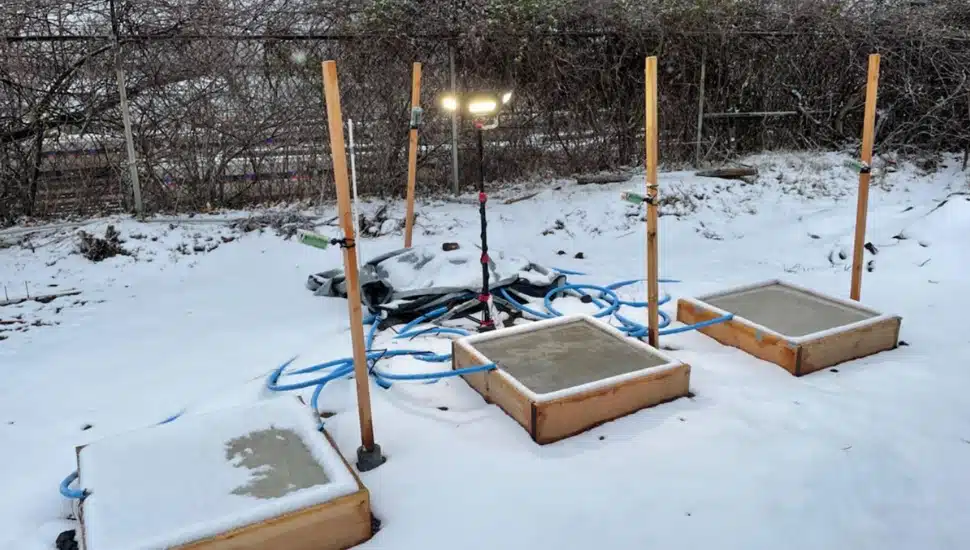
His team worked on two types of concrete made with paraffin wax, a petroleum-based oil usually used in candles and crayons, to create an alternative. They installed several slabs in the courtyard at the university and let nature take its course. Both types were able to melt snow on their own.
The concept uses phase-change materials to achieve the desired effect. In sunny conditions, paraffin will liquefy, while in cold conditions, it will harden into a solid and start giving off heat.
“It’s kind of like a battery – paraffins recharge when there’s sun and heat, turning into their liquid phase,” Farnam said. “And when snow or rain or a cold event comes, they start [solidifying] and releasing heat.”
Read more about the self-heating concrete in The Philadelphia Inquirer.
_____