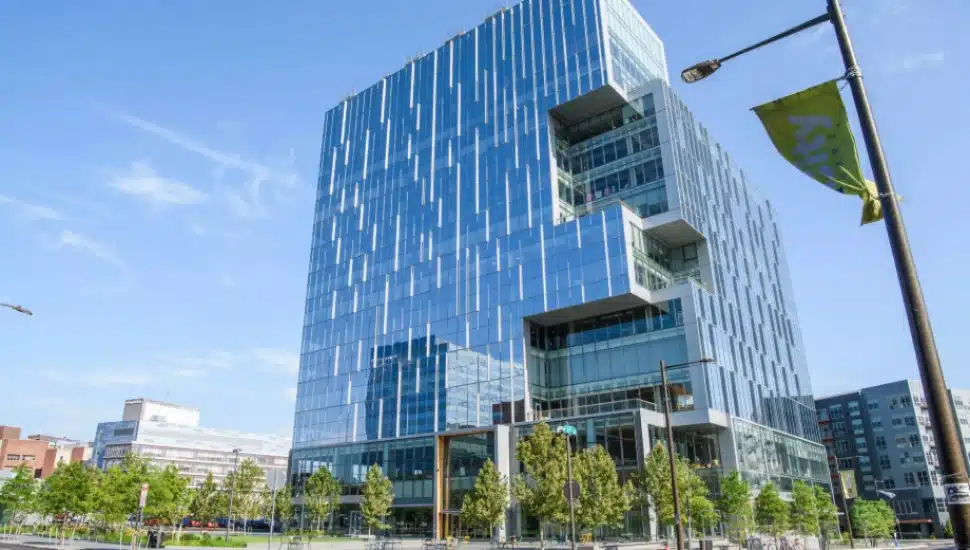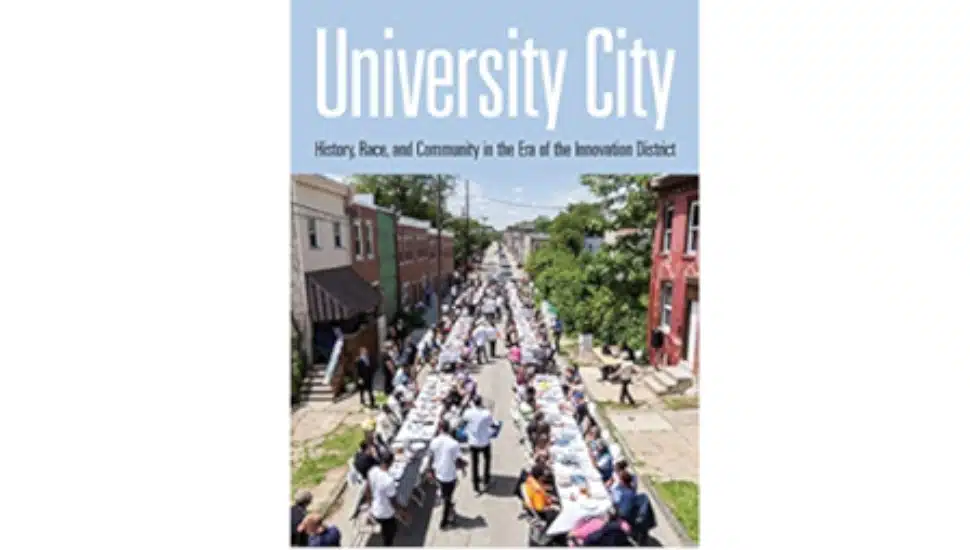
A new book by Laura Wolf-Power titled “University City: History, Race, and Community in the Era of the Innovation District,” looks at the processes that made it possible for the University of Pennsylvania and Drexel University to dramatically reshape parts of West Philadelphia, writes Amy Cohen for Hidden City.
Wolf-Power also examines the efforts residents of neighborhoods adjacent to these universities took to maintain community cohesion while facing aggressive institutional growth.
The term “University City” was first used in 1958 in a City Planning Commission document, as city leaders were trying to find ways to transform the economy. Five years later, the Redevelopment Authority presented a draft for a science and research center between Penn and Drexel.
The thing standing in the way of plans to build the University City Science Center was a Black working-class neighborhood of more than 3,400 people, 1,400 homes, and many local businesses known as Black Bottom.
The city planned to completely eradicate the neighborhood, but residents staged a multi-day sit-in at former Mayor James Tate’s office.
Unfortunately, despite the arduous efforts by community members to resist these plans, they were unsuccessful and Black Bottom was leveled in 1967.
Read more about the new book and history of University City in Hidden City.
_____