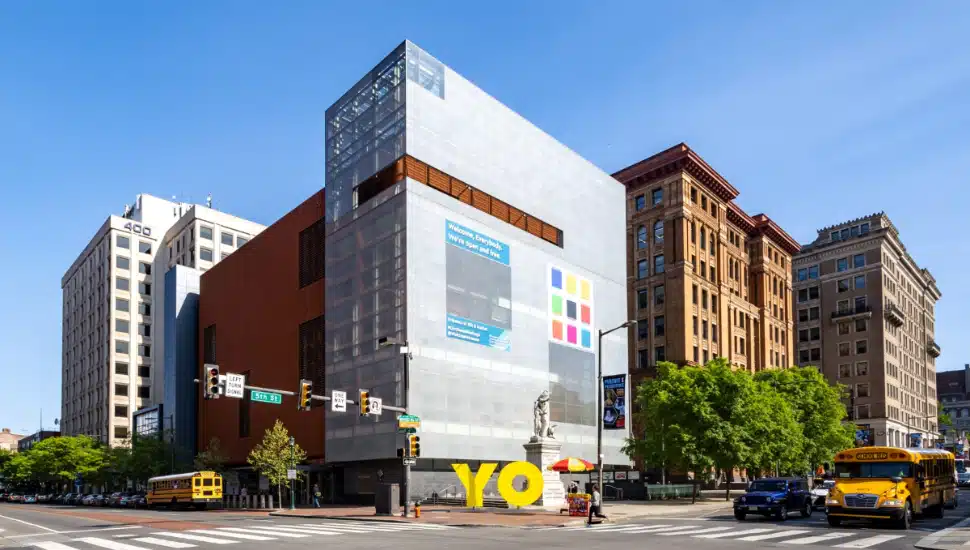
The Weitzman National Museum of American Jewish History has unveiled its newest exhibition, The First Salute, which highlights a key piece of history regarding the American Revolution that is not often discussed.
This new exhibit brings to light a small island that many may not be familiar with: Sint Eustatius in the Caribbean.
The governor of the island, Gov. Alida Francis, paid a visit to Philadelphia on the eve of the exhibit’s opening.
She painted a detailed picture of the island, which she described as “an island so small that one can stand upon it and see the ocean in every direction.”
However, it’s much more.
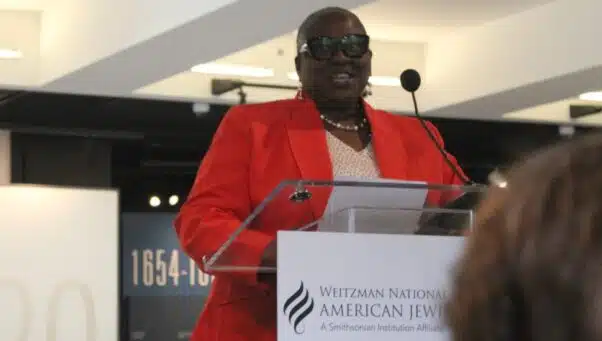
“Sint Eustasius was a place where nations met, where merchants traded, and where ideas traveled. It was a place where people of different faiths and backgrounds found room to live, work, worship, and build,” Gov. Francis added.
For centuries, the Caribbean island has been left in the shadows,. However, this new exhibit ensures this is no longer the case.
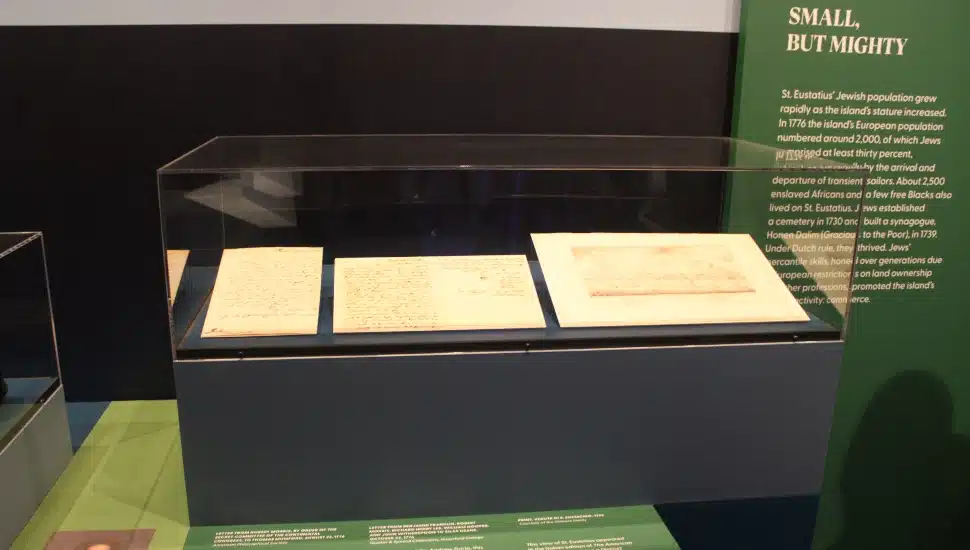
The First Salute features doezens of unique artifacts, and also highlights the crucial contributions that Caribbean Jewish community made in the American Revolution.
Jonathan Sarna, a longtime chief historian at the museum, mentioned the name Jonas Phillips whom, Sarna said, “although started in this country as an indentured servant… rose to become an important merchant, which really means he used Sint Eustatius to help bring supplies to the new nation.”
While the Jewish community was small at the time, their impact was huge, said Pam Nadell, a fellow historian, professor, and expert in American Jewish History.
“What really jumps out at the exhibit is the fact that Jews were here, they were less than a 10th of a percent of the new nation, and yet they stood up for religious liberty,” she added. “Yes, they were standing up for it for themselves, but ultimately they helped to enshrine religious liberty as a foundational principle of what would become the United States.”
The First Salute is the first of three that will open during the semiquincentennial year.
“There is no better time than now, than here in Philadelphia, in this moment in our country’s history, to delve deeper into the deeper meanings of the Revolution, the people who made that Revolution happen,” said Dan Tadmor, president and CEO of the Weitzman National Museum of American Jewish History.
The First Salute will remain in view for about a year until April 2027.
______
Editor’s Note: This post first appeared on PHILADELPHIA Today in April 2026.