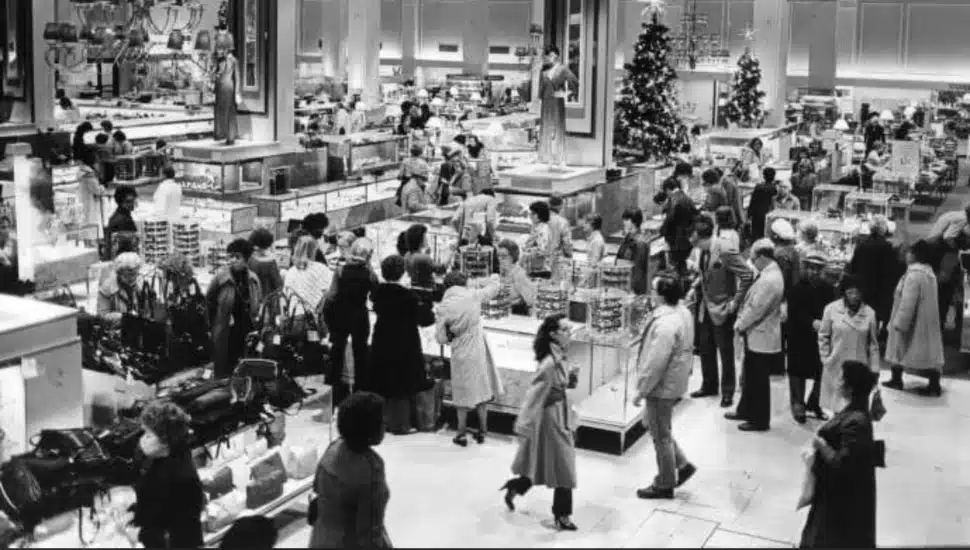
There was a time when going downtown in Philadelphia meant something special.
Long before online shopping and suburban malls transformed American retail, Market Street was the center of Philadelphia’s social and commercial universe.
Families packed onto trolleys and trains headed for Center City, where towering department stores stretched for blocks. During the holidays, sidewalks filled shoulder-to-shoulder with shoppers carrying bags beneath glowing window displays, while organ music echoed through Wanamaker’s Grand Court.
For generations of Philadelphians, the city’s department stores were more than places to shop. They were landmarks, gathering spaces, and traditions woven into everyday life.
The Man Who Invented Modern Shopping
At its peak, Philadelphia’s department store district rivaled any in the country.
Massive retailers like Wanamaker’s, Strawbridge & Clothier, Gimbels, Lit Brothers, and Snellenburg’s dominated East Market Street, clustered around 8th and Market and stretching toward 13th Street, with grand architecture and sprawling interiors that felt almost theatrical.
These were not simple stores. They were urban palaces filled with marble floors, brass elevators, sweeping staircases, elegant dining rooms, and display windows designed to stop pedestrians in their tracks.
Much of what made these stores feel modern and trustworthy traces back to one man.
John Wanamaker, a Philadelphia native, pioneered retail practices so fundamental today that it’s easy to forget someone had to invent them: fixed price tags on merchandise, money-back guarantees, and in-store dining.
When he transformed a former Pennsylvania Railroad freight hall to open Grand Depot at 13th and Market in 1876, Wanamaker wasn’t just selling good at what became America’s first department store, he was building a civic institution.
More Than Just Shopping
A Saturday shopping trip downtown often became a full-day event.
Families browsed toy departments during the holidays, ate lunch in ornate dining rooms, listened to concerts beneath the Wanamaker Organ, and wandered through floors packed with clothing, furniture, appliances, and gifts.
Lit Brothers became known for its Enchanted Colonial Village, an elaborate animated Christmas display that began in the early 1960s when the store invested $1 million to compete with other Market Street retailers.
Designed by Philadelphia display artist Thomas Comerford and built by a German toy manufacturer, the block-long installation depicted a colonial-era Christmas in miniature, drawing hundreds of thousands of visitors each holiday season.
At Wanamaker’s, the signature holiday tradition was the Christmas Light Show.
Created in 1955 by store employee Frederick Yost, it featured lights synchronized to an audio recording in the Grand Court, a spectacle that outlasted the store itself and still runs every holiday season today.
Wanamaker’s also housed multiple restaurants, most famously the Crystal Tea Room, where ladies wore white gloves at its tables and could order first-rate cuisine. Immense and filled with chandeliers, it was modeled on the tea room in the Philadelphia mansion of Robert Morris, a financier of the American Revolution. The room could seat 1,400 people at once and was, by many accounts, the largest dining room in Philadelphia.
Even simple phrases from the era carry emotional weight today.
Older Philadelphians still talk about “meeting at the Eagle,” referring to the bronze eagle statue on the ground floor of Wanamaker’s that became one of the city’s most recognizable meeting spots.
The stores also helped shape modern retail culture itself.
They popularized experiences that are now commonplace: browsing for leisure, fixed pricing, elaborate seasonal displays, restaurant dining inside stores, and destination shopping centered around entertainment as much as commerce.
When the Suburbs Won
But beginning in the decades after World War II, Philadelphia’s department store era slowly began to fade.
As suburbanization accelerated, middle-class families increasingly moved outside the city, across the Main Line, into Montgomery County, Bucks County, Delaware County, and South Jersey.
Shopping habits changed alongside them.
New suburban malls like King of Prussia Mall and Cherry Hill Mall offered free parking, climate-controlled shopping, and easier access for car-dependent consumers.
Philadelphia fought back.
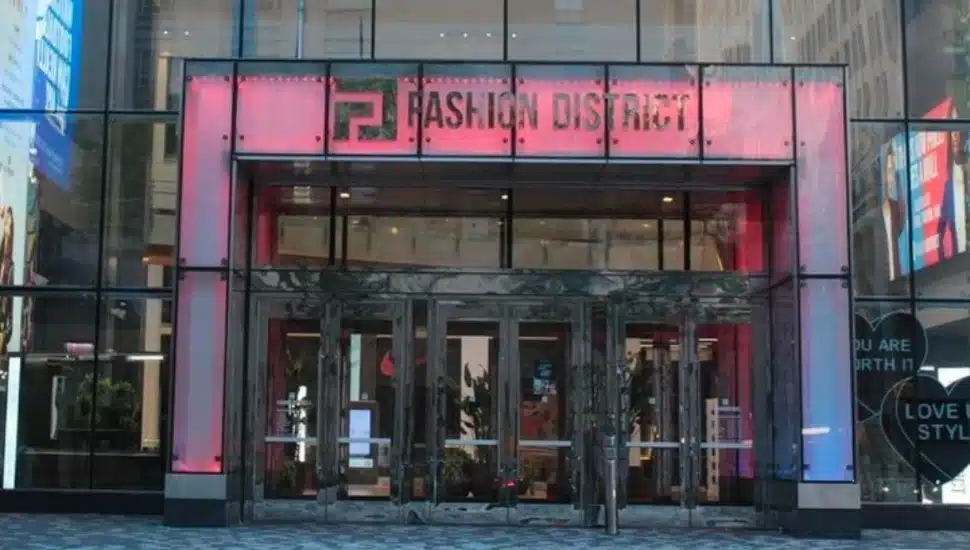
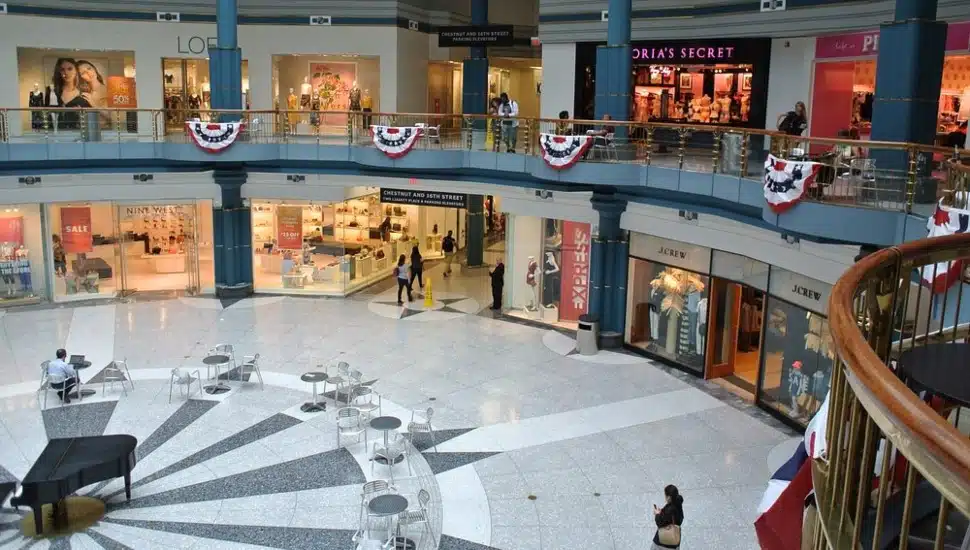
In the late 1970s, the city opened the Gallery at Market East, an urban shopping mall built directly above the subway stop at 8th and Market, designed to keep shoppers downtown by bringing the suburban mall experience to Center City.
Strawbridge’s anchored one end, while a downsized Gimbels anchored the other.
For a time, it worked. But the Gallery struggled for decades, cycling through tenants and demographics, before closing for redevelopment in the 2015.
The great flagship stores met varied fates.
Wanamaker’s was sold, passed through several owners, and became a Macy’s in 2006, which itself closed in March 2025, leaving the building’s future once again uncertain.
The Lit Brothers building, saved from two demolition permits, was converted into office and retail space and still stands at 7th and Market, its original cast-iron façade intact.
Strawbridge’s was absorbed into the Gallery redevelopment.
What Remains
The Wanamaker Organ still plays.
Inside the former department store at 13th and Market, the world’s largest pipe organ fills the Grand Court with music, just as it has since 1911.
The Christmas Light Show still runs each holiday season.
The bronze eagle still stands on the ground floor.
For many Philadelphians, these are not just relics. They are the last living proof of a version of this city that once felt bustling, glamorous, communal, and alive, and the stubborn insistence that some of it, at least, is worth preserving.