The Bucks County Playhouse in New Hope has played an outsized role in American entertainment.
For decades, actors have stepped onto the stage at Bucks County Playhouse early in their careers, long before wider audiences knew their names.
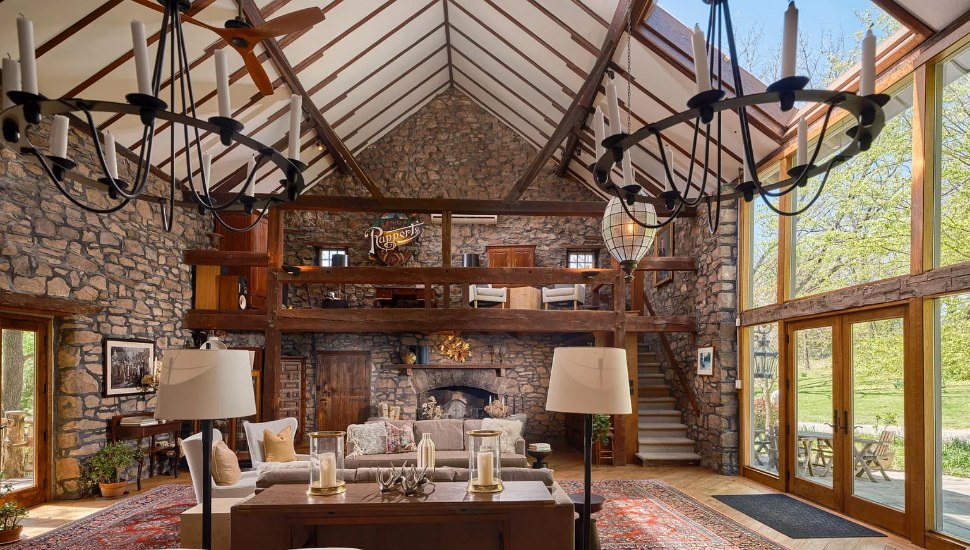
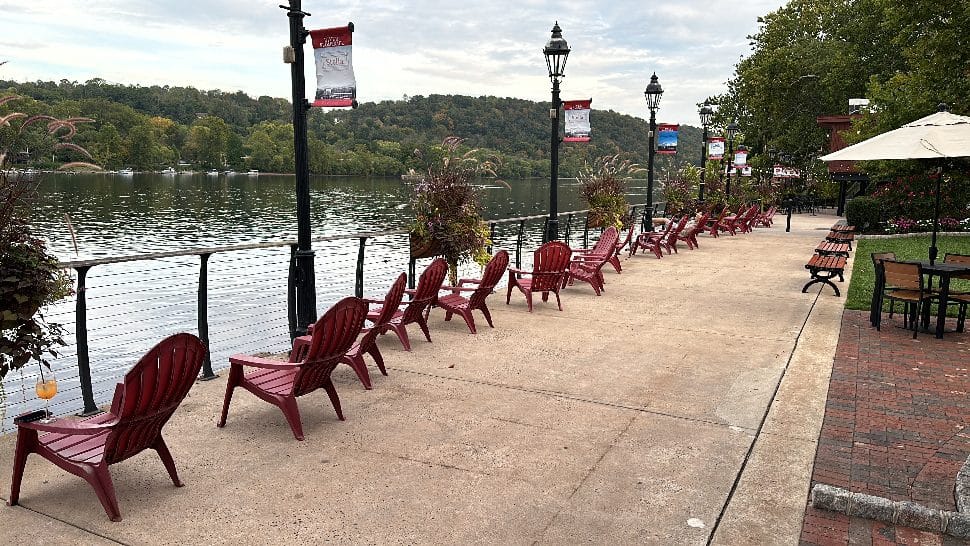
Many went on to become some of the most recognizable figures in film and television. The building that made it all possible has been standing since 1790, when it was built as a grist mill on the banks of the Delaware River.
The town of New Hope takes its name from those original mills. It is a fitting origin story for a place that would spend the next two centuries giving hope to aspiring performers.
Opened in 1939 inside the converted mill, the Playhouse quickly became one of the country’s leading summer stock theaters.
Its proximity to New York City made it easy for producers, directors, and agents to visit. Actors gained real stage experience in front of engaged audiences while also building visibility with people who shape careers.
The early decades built the theater’s reputation. Grace Kelly made her professional debut here at 19, playing a small role in her uncle’s play. She returned in 1952 as one of Hollywood’s brightest stars to perform again, a full-circle moment that says everything about the hold this stage has on the people who pass through it.
Helen Hayes brought star power to the stage, joined by names like Lillian Gish, Kitty Carlisle, and Zero Mostel.
Even Harpo Marx, famous for never speaking in his act, broke that rule here, delivering lines on the BCP stage in a production of “The Man Who Came to Dinner.”
Established actors chose New Hope because the productions were serious and the audiences paid attention.
The strongest pattern is who came before they were famous. Robert Redford appeared here in 1963, starring in the world premiere of Neil Simon’s “Barefoot in the Park,” directed by Mike Nichols.
Neil Simon himself had launched his playwriting career at this same theater, when his first play, “Come Blow Your Horn,” had its world premiere on this stage.
Dick Van Dyke launched his stage career at the Playhouse before making his Broadway debut that same year in “Bye Bye Birdie.”
Angela Lansbury made her American stage debut here.
Bob Fosse performed on this stage before becoming one of Broadway’s most celebrated directors and choreographers.
In 1964, a 17-year-old Rob Reiner arrived fresh out of Beverly Hills High School to apprentice at the Playhouse, working alongside fellow unknowns Alan Alda, Liza Minnelli, and Merv Griffin. Four future stars, in the same apprentice class, in the same small riverside town.
The pattern repeats. Unknown performers arrive. National recognition follows.
The Playhouse also continued to attract working stars across decades. Walter Matthau, Jack Klugman, Leslie Nielsen, and Larry Hagman all performed here.
For many, it offered a place to stay sharp, test material, and connect with audiences in a more intimate setting than Broadway allowed.
After reopening in 2012 following a period of foreclosure and a multi-million dollar restoration, the theater regained momentum.
Jessica Walter returned to the stage more than five decades after first apprenticing here as a teenager.
In 2016, a star-studded production of “Steel Magnolias” directed by Marsha Mason and featuring Lucy DeVito, Patricia Richardson, and Walter became the highest-earning show in Playhouse history.
Today’s lineup continues to feature a mix of Broadway performers and screen actors rotating through New Hope.
The formula has not changed. Actors get lead roles and consistent stage time. They perform in a professional setting without the pressure of a New York opening. They work alongside experienced directors and peers. They build relationships that often lead to larger opportunities.
For local audiences, it creates a rare experience. You can watch an actor before a breakout role, or see an established name up close in a smaller venue. It reinforces New Hope’s identity as an arts destination and keeps Bucks County connected to the broader entertainment world.
For nearly a century, actors have come to this stage to work, grow, and take the next step. Many leave New Hope on a path that leads much farther, often all the way to Hollywood.
_____