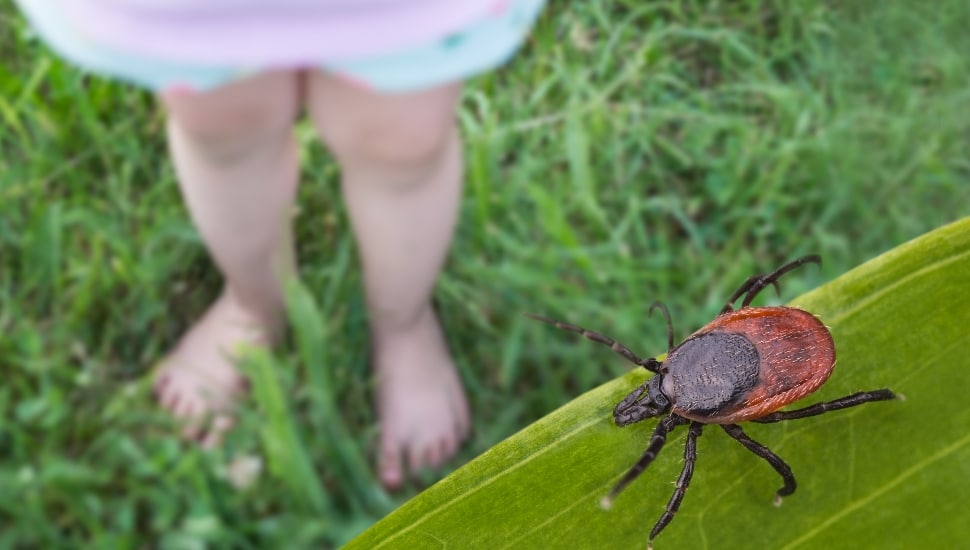
If it feels like tick season is starting earlier and hitting harder, you’re not imagining it.
Health officials and researchers are warning that 2026 could be one of the worst tick seasons southeastern Pennsylvania has seen in years, as warmer winters and earlier spring temperatures create ideal conditions for ticks to survive and spread, writes Mary Walrath-Holdridge for USA Today.
Pennsylvania already ranks among the states with the highest Lyme disease case counts in the country, and state health officials say the numbers keep climbing, with thousands reported every year.
Southeastern Pennsylvania, including Bucks, Chester, Montgomery, Delaware, and Philadelphia counties, remains one of the most active hotspots in the state.
The primary culprit is the blacklegged tick, also known as the deer tick, which spreads Lyme disease along with other illnesses, including anaplasmosis and babesiosis.
Researchers are also tracking the expanding presence of lone star ticks in Pennsylvania, which have been linked to Alpha-gal syndrome.
One of the more unsettling findings this year is where people are actually getting bitten.
It’s not just on hiking trails or in deep woods. Many bites happen close to home, during routine time in the yard.
“Research shows that many disease infections stem from tick bites that occur in residential settings, so in people’s own backyards,” said Dr. Jim Fredericks, chief entomologist with the National Pest Management Association.
Fredericks points to the transition zones between maintained lawns and overgrown brush as the highest-risk areas on a typical property. “That’s where ticks are bound to be,” he said.
Timing matters too. Nymph ticks pose the biggest danger in late spring and early summer because they are tiny and easy to miss.
June is typically the peak month for Lyme disease transmission in Pennsylvania.
The good news: simple steps go a long way. Use insect repellent, wear light-colored clothing, check yourself and your pets after spending time outside, shower after outdoor activity, and keep grass trimmed and leaf litter cleared.
Early symptoms of Lyme disease often include fever, fatigue, headaches, and muscle aches.
Not everyone develops the well-known bull’s-eye rash, so don’t wait for it to seek care if something feels off.
Want to know how to protect yourself and your pets this tick season? Click through to read the full USA Today story.
_____