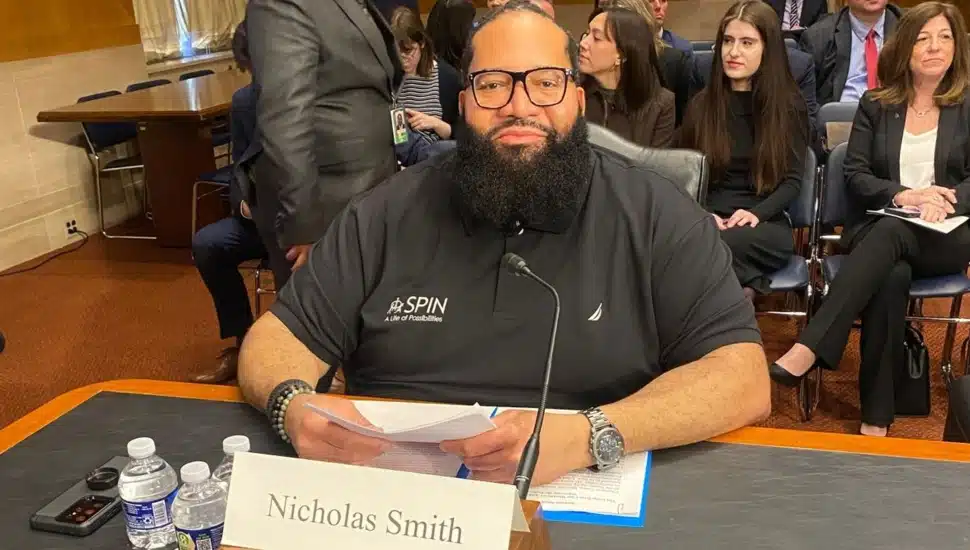
For the last 25 years, I have been fortunate to have a wonderful job supporting individuals with intellectual disability and autism. As a Direct Support Professional (DSP), I assist with the ever-changing physical, emotional, personal, communication, and recreational needs of individuals.
My job title doesn’t begin to describe the valuable role I play in people’s lives. On any given day, my job responsibilities include administering medications, teaching individuals how to walk, or working on developing and improving hand-eye coordination.
Every day, DSPs teach new skills to increase independence, including how to use public transportation and new assistive technology such as electric wheelchairs. We provide transportation, monitor physical and emotional well-being, and help them form friendships and relationships in their homes and communities.
We help meet their dietary needs by taking them grocery shopping. We also prepare food based on their dietician’s directions, and we teach cooking skills. Our role is to guide individuals throughout their life journey. Whether it is assisting a person with packing for an upcoming trip or preparing them for a job interview, we are by their side.
I am happy that many of the individuals I support consider me like family, and I take my responsibilities very seriously. One of the things I pride myself on is my mentorship and how I have made an impact not only on those I support but also my fellow coworkers who seek my advice.
For the past 17 years, I have been working for SPIN, a nonprofit organization that provides lifespan services for children and adults with intellectual, developmental, and autism spectrum disabilities in Philadelphia, Montgomery, Bucks, Lehigh, and Northampton counties.
As a DSP, I know what it takes to be successful in this career; it is not an easy job. I work 24-30 hours of overtime to support myself and my family. Although I receive paid time off, when I do have time off, it can be difficult for me to “turn off” because I care so deeply about those I support. The work never ends.
DSPs must be able to handle the job in times of uncertainty or crisis. During the COVID-19 pandemic, we had to adjust the ways we perform our daily tasks and implemented new protocols to keep everyone safe. We made sure individuals, and their families, were aware of these changes, as it is important to be open with them during uncertain times.
As a longtime DSP, I have seen and experienced the many challenges that come with the job. Between the long hours, the low pay, and the emotional toll this job takes, only truly devoted people can push past these obstacles and stay in this career. I have been lucky enough to love what I do over the past two decades.
Many DSPs who enjoy the work have to work second or even third jobs just to make ends meet. It should not have to be this way.
Being a DSP is a rewarding career, and we create lasting, memorable experiences for all the individuals we support, but we also need to be appreciated, recognized, and paid a fair wage for the critically important work we do. Legislators on both sides of the aisle need to advocate for increased funding.
Bills being introduced at the federal level that help the roles of DSPs need to be passed. It is also vital that the role of DSPs gets a Standard Occupational Code (SOC), so we are counted accurately and identified as essential workers. This change will help to increase our wages.
We are not numbers. We are human beings, and our dedication is more than enough proof that we deserve a living wage.
______________
Nicholas Smith has worked as a Direct Support Professional for more than 25 years. For the last 17 years, he has worked for SPIN, a Philadelphia-based nonprofit that provides people-first services and supports for children and adults with intellectual, developmental, and autism spectrum disabilities. SPIN’s culture is rooted in the belief that everyone has the right to achieve their best life. Learn more about SPIN.