
Since the early 1980s, the Demuth Museum in Lancaster, operated by the Demuth Foundation, has provided insight into Artist Charles Demuth’s life and groundbreaking works through its collections, exhibitions, and educational programs. This Lancaster County gem has always been a hotspot for art and creativity while also fostering discussions on broader issues surrounding the life of the modernist painter, who lived from 1883 to 1935.
But, as Abby Baer, Executive Director of the Demuth Foundation, explained, there has always been so much more to tap into, explore, and share with the world about this profound artist, who was part of the LGBTQ+ community and also had diabetes.
The Research Behind the Reinterpretation
Recognizing the amount of time and research needed before recalibrating the museum’s exhibits, the Foundation launched the Demuth Museum Reinterpretation Research Project from April 2022 to March 2023. This effort was backed by funding from the National Trust for Historic Preservation’s Telling the Full History Preservation Fund, as well as support from the National Endowment for the Humanities. The research explored Demuth’s relationship to the LGBTQ+ community of his time and how disability and disease may have impacted his artwork.
“We made several changes after spending about a year on research and planning,” said Baer. “We wanted to incorporate more about Charles and his life, personal characteristics, and the influences behind his artwork to deepen our understanding of it. This included exploring his diabetes diagnosis, the experiences of the early 20th-century gay community, and his childhood illness, which led to a lifelong disability. Understanding these aspects helped us better grasp how they shaped his work and travels.”
Baer notes that while these topics have been discussed before, this marks the first formal inquiry and report by the Foundation on these aspects of Demuth’s life.
Enhancing the Visitor Experience
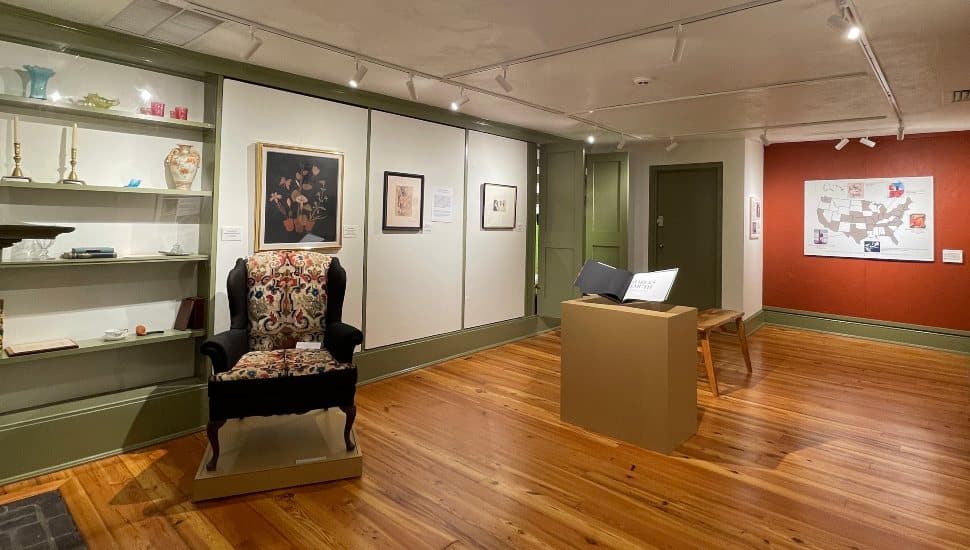
After a three-month closure for renovations, the museum reopened in April 2024 and now focuses more extensively on Demuth’s life, including his diabetes diagnosis, experiences in the early 20th-century gay community, and mobility issues.
“The museum now dedicates 75-80 percent of its space to his story, with rotating exhibits replaced by a permanent collection,” said Baer.
Baer also explained how this revamping of the Demuth Museum has enhanced the visitor experience, stating that previously, visitors to the museum wouldn’t learn much about Demuth due to the challenges of displaying the permanent collection, which consists of delicate works on paper. To prevent deterioration, those pieces couldn’t be on constant display.
“Over time, we expanded the collection and implemented a rotating exhibition system, allowing all pieces to be showcased over 12 to 18 months,” stated Baer. “This approach now lets us use the collection to tell Charles’s story, which wasn’t a primary focus in the past when exhibits featured a mix of local and external artwork.”
Expert Contributions and Insights
Over the course of the research, several experts were consulted to offer fresh interpretations of Demuth’s artistic masterpieces, contributing to an enhanced visitor experience. Baer shared that at the project’s outset, they partnered with the YWCA of Lancaster for gender and sexuality training, including discussions on the ethics of posthumously “outing” historical figures. The YWCA also reviewed their research, offering a local perspective. Alongside these contributions, the Demuth Foundation staff conducted extensive research to inform and guide reinterpretation efforts.
Furthermore, the Foundation invited 10 art scholars and curators nationwide to contribute essays analyzing Demuth’s pieces. Five of them submitted fresh perspectives on how his sexuality and disability may have influenced his art. Additionally, Franklin & Marshall College Professor Alison Kibler shared insights into Lancaster’s historical environment and its impact on Demuth.
“Previously, we would simply display the artwork, allowing visitors to interpret it on their own,” said Baer. “While that approach has merit, modern and abstract art can often be complex and not immediately clear. Charles Demuth, in particular, infused his work with deep layers of metaphor and meaning. Gaining insight into his creative process and what he might have been thinking while making these pieces allows us to interpret his art more effectively and discover new ways to understand it.”
What Visitors Can Expect Now at the Demuth Museum
Visitors to the Demuth Museum can now expect a more immersive look at his life and how his personal experiences influenced his art. More than that, the exhibit fosters a deeper understanding and empathy for people from all walks of life.
“We hope Charles Demuth’s story becomes more relatable and that visitors find connections to different aspects of his life,” said Baer. “Many have shared personal experiences with diabetes, whether their own or a loved one’s, and seeing Demuth’s journey through the lens of the early 1920s — when insulin was just emerging — offers a powerful perspective. It’s inspiring to reflect on how far medical advancements have come, making diabetes much more manageable today. Seeing visitors connect with his story in this way is both meaningful and rewarding.”
About the Demuth Foundation
The Demuth Foundation’s mission is to promote the appreciation and awareness of the visual arts in Lancaster. The Demuth Foundation works to preserve the legacy of Demuth and his groundbreaking art, support current local and regional artists, and inspire a new generation of creatives. This is accomplished through unique exhibitions and engaging educational programs to serve a diverse community.
The Foundation started as a grassroots effort to convert the artist’s home and studio into a museum in the early 1980s and today boasts the largest collection of his work, attracts audiences from across the globe, and is a member of the National Trust for Historic Preservation’s Historic Artists’ Home and Studio program.
In 2014, the Demuth Museum merged with the Lancaster Museum of Art, forming a unified organization with two locations but one mission. The Demuth Museum continues to focus on the life and legacy of Demuth, while the Lancaster Museum of Art highlights local artists and traveling exhibitions. Together, they promote visual arts in the community through educational programs, memberships, and collaborative exhibitions and events.
The Demuth Museum, located at 120 East King Street in Lancaster, offers free admission with a suggested $10 donation. It is just a few blocks from the Lancaster Museum of Art, making both museums easily accessible on foot. Check their exhibition schedules to see current displays.
Find more great ways to explore Lancaster County at Discover Lancaster.