Philadelphia has a housing problem, and Mayor Cherelle Parker is betting that part of the answer might be built in a factory, writes Gabriel Donahue for Technical.ly.
Her administration’s $2 billion H.O.M.E. (Housing Opportunities Made Easy) initiative sets an ambitious target: 30,000 housing units created or restored across the city.
But getting there means building faster and cheaper than Philadelphia has managed in years. The challenge comes at a moment when material costs are still elevated from pandemic-era disruptions. Tariffs also add pressure to supply chains, and the construction industry is short on skilled workers.
A Different Way to Build
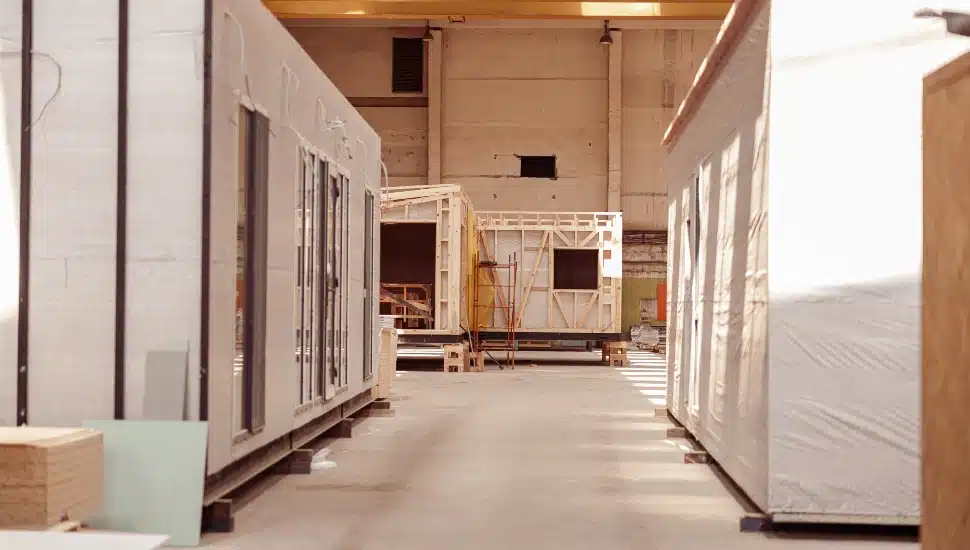
Modular construction flips the traditional homebuilding model on its head. Instead of assembling a structure piece by piece on a job site, factory workers build homes in sections indoors, then transport and install them at the final location.
Supporters say the approach can shrink timelines, cut waste, reduce weather-related delays and stretch a limited labor pool further than conventional methods allow.
The concept is not new to Philadelphia. Volumetric Building Companies, a Philadelphia-based modular developer, has already completed several projects in the city. These include market-rate apartments and Veteran’s Village.
The 47-unit affordable housing development in Frankford was built specifically for veterans facing homelessness and housing insecurity.
Not a Silver Bullet
Enthusiasm for modular construction comes with a caveat. Experts caution that the model does not automatically lower costs.
Land acquisition, utility work, design approvals, inspections and site remediation can all eat into the savings that factory-built homes are supposed to deliver.
The Parker administration is also working through a fundamental strategic question. Should the city rely on existing modular manufacturers outside Philadelphia, or invest in bringing factory production inside city limits, possibly to underutilized sites in North Philadelphia?
Both paths come with tradeoffs, and neither is without risk.
One Tool Among Many
No one is calling modular construction a complete solution to Philadelphia’s housing crisis.
The shortage runs too deep, and the obstacles are too varied, for any single approach to close the gap.
But as the Parker administration pushes toward its 30,000-unit goal against a tight timeline and a difficult market, the appeal of a faster, more flexible building method is hard to ignore.
Modular housing may not be the whole answer. For Philadelphia right now, it does not need to be.
Learn more about what modular housing could mean for Philadelphia’s housing crisis in Technical.ly.